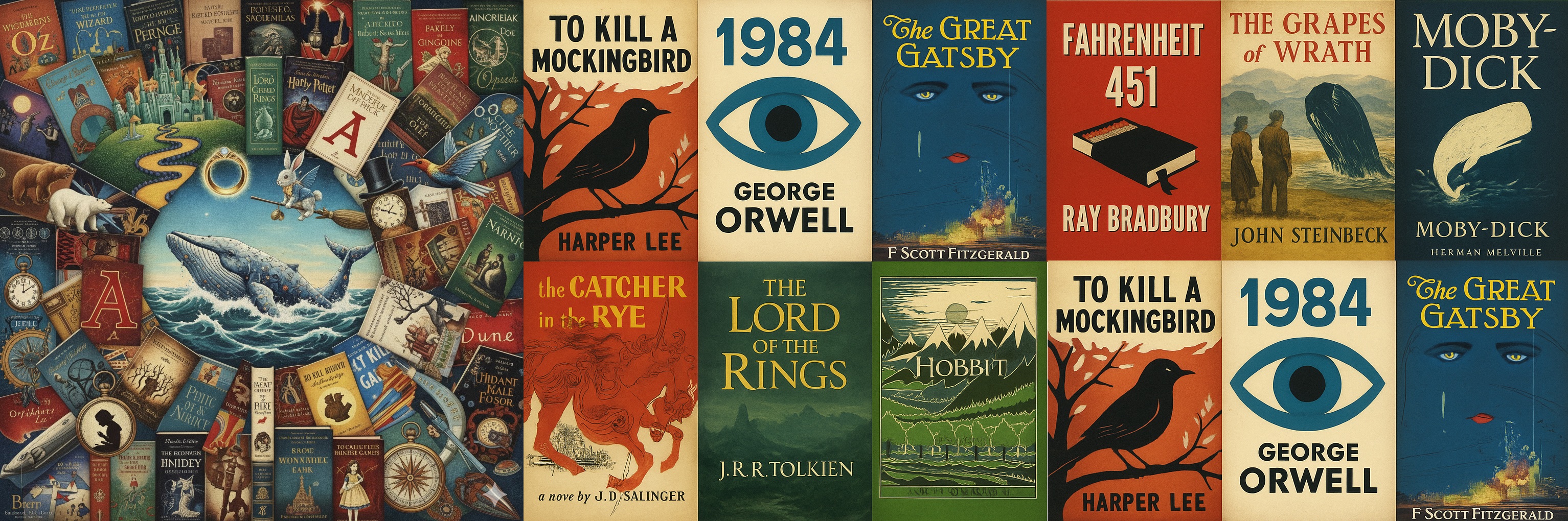
The Great Gatsby
9 chapters
Chapter 1
CHAPTER 1 SUMMARY - THE GREAT GATSBY
**Setting the Stage: Nick Carraway's Introduction**
Chapter 1 serves as both an introduction to narrator Nick Carraway and an establishment of the novel's key themes and characters. The chapter opens with Nick reflecting on his father's advice about withholding judgment, a philosophy that has made him the confidant of many troubled souls but also exposed him to "veteran bores." This opening immediately establishes Nick as both observer and participant in the events to follow.
**Nick's Journey East**
In the spring of 1922, Nick moves from the Midwest to West Egg, Long Island, to learn the bond business. He rents a small, modest house for $80 a month, situated between two enormous mansions. His neighbor to the right lives in a colossal Gothic mansion - this is Jay Gatsby, though Nick doesn't yet know him personally. The contrast between Nick's humble dwelling and the surrounding opulence immediately establishes the theme of class disparity that will run throughout the novel.
**The Geography of Moral Distinction**
Fitzgerald carefully establishes the symbolic geography of East and West Egg. Nick lives in West Egg, described as "the less fashionable of the two," while across the bay lies East Egg, where "the white palaces of fashionable East Egg glittered along the water." This distinction between new money (West Egg) and old money (East Egg) becomes crucial to understanding the social dynamics and class tensions of the story.
**Dinner at the Buchanans**
The chapter's central scene takes place at Tom and Daisy Buchanan's mansion in East Egg. Nick visits his second cousin Daisy and her husband Tom, a wealthy, physically imposing man Nick knew from Yale. Tom embodies old money privilege and casual brutality - he's described as having "a cruel body" and speaking with "paternal contempt." His racist views about "The Rise of the Colored Empires" reveal his fear that his privileged position might be threatened.
**Daisy's Complex Character**
Daisy is introduced as ethereally beautiful but fundamentally hollow. Her voice is described as having "a singing compulsion" and containing "a promise that she had done gay, exciting things." However, her conversation reveals a studied carelessness and sophisticated cynicism. Her famous declaration about her daughter - "I hope she'll be a fool—that's the best thing a girl can be in this world, a beautiful little fool" - captures both her awareness of women's limited options and her own chosen role as ornamental rather than substantial.
**Jordan Baker and Social Gossip**
Jordan Baker, the professional golfer, represents the "new woman" of the 1920s - independent, athletic, and morally ambiguous. She brings up Gatsby's name, creating curiosity, and reveals Tom's affair with "some woman in New York." Her dishonesty (Nick recalls some unpleasant story about her) foreshadows the moral corruption underlying the glittering surface of this world.
**The Mysterious Gatsby**
The chapter ends with Nick's first glimpse of his mysterious neighbor. After returning home, Nick sees a figure standing on Gatsby's lawn, arms stretched toward the water. In the distance, across the bay, Nick notices "a single green light, minute and far away, that might have been the end of a dock." This green light becomes one of the novel's most powerful symbols, representing Gatsby's yearning for something beyond his reach - ultimately revealed to be Daisy herself.
**Key Themes Introduced**
1. **The American Dream**: The contrast between Nick's modest Midwestern background and the opulent East Coast wealth sets up questions about success and morality.
2. **Class and Social Status**: The distinction between East and West Egg, old and new money, establishes social hierarchies that will drive much of the conflict.
3. **Moral Corruption**: From Tom's affair to Jordan's dishonesty to the general atmosphere of careless wealth, moral decay lurks beneath surface glamour.
4. **The Past and Memory**: Nick's reflective narration and the characters' references to their shared history establish memory as a central concern.
5. **Appearance vs. Reality**: The beautiful surfaces (Daisy's voice, the Buchanans' mansion, the glittering parties) mask uglier truths.
The chapter masterfully establishes Nick as an unreliable but sympathetic narrator, introduces the central characters and their relationships, and creates the symbolic framework (green light, geographical distinctions, seasonal imagery) that will structure the entire novel. Fitzgerald's prose style - lyrical, symbol-laden, and psychologically penetrating - is fully established, setting the stage for the tragic story to unfold.
**Setting the Stage: Nick Carraway's Introduction**
Chapter 1 serves as both an introduction to narrator Nick Carraway and an establishment of the novel's key themes and characters. The chapter opens with Nick reflecting on his father's advice about withholding judgment, a philosophy that has made him the confidant of many troubled souls but also exposed him to "veteran bores." This opening immediately establishes Nick as both observer and participant in the events to follow.
**Nick's Journey East**
In the spring of 1922, Nick moves from the Midwest to West Egg, Long Island, to learn the bond business. He rents a small, modest house for $80 a month, situated between two enormous mansions. His neighbor to the right lives in a colossal Gothic mansion - this is Jay Gatsby, though Nick doesn't yet know him personally. The contrast between Nick's humble dwelling and the surrounding opulence immediately establishes the theme of class disparity that will run throughout the novel.
**The Geography of Moral Distinction**
Fitzgerald carefully establishes the symbolic geography of East and West Egg. Nick lives in West Egg, described as "the less fashionable of the two," while across the bay lies East Egg, where "the white palaces of fashionable East Egg glittered along the water." This distinction between new money (West Egg) and old money (East Egg) becomes crucial to understanding the social dynamics and class tensions of the story.
**Dinner at the Buchanans**
The chapter's central scene takes place at Tom and Daisy Buchanan's mansion in East Egg. Nick visits his second cousin Daisy and her husband Tom, a wealthy, physically imposing man Nick knew from Yale. Tom embodies old money privilege and casual brutality - he's described as having "a cruel body" and speaking with "paternal contempt." His racist views about "The Rise of the Colored Empires" reveal his fear that his privileged position might be threatened.
**Daisy's Complex Character**
Daisy is introduced as ethereally beautiful but fundamentally hollow. Her voice is described as having "a singing compulsion" and containing "a promise that she had done gay, exciting things." However, her conversation reveals a studied carelessness and sophisticated cynicism. Her famous declaration about her daughter - "I hope she'll be a fool—that's the best thing a girl can be in this world, a beautiful little fool" - captures both her awareness of women's limited options and her own chosen role as ornamental rather than substantial.
**Jordan Baker and Social Gossip**
Jordan Baker, the professional golfer, represents the "new woman" of the 1920s - independent, athletic, and morally ambiguous. She brings up Gatsby's name, creating curiosity, and reveals Tom's affair with "some woman in New York." Her dishonesty (Nick recalls some unpleasant story about her) foreshadows the moral corruption underlying the glittering surface of this world.
**The Mysterious Gatsby**
The chapter ends with Nick's first glimpse of his mysterious neighbor. After returning home, Nick sees a figure standing on Gatsby's lawn, arms stretched toward the water. In the distance, across the bay, Nick notices "a single green light, minute and far away, that might have been the end of a dock." This green light becomes one of the novel's most powerful symbols, representing Gatsby's yearning for something beyond his reach - ultimately revealed to be Daisy herself.
**Key Themes Introduced**
1. **The American Dream**: The contrast between Nick's modest Midwestern background and the opulent East Coast wealth sets up questions about success and morality.
2. **Class and Social Status**: The distinction between East and West Egg, old and new money, establishes social hierarchies that will drive much of the conflict.
3. **Moral Corruption**: From Tom's affair to Jordan's dishonesty to the general atmosphere of careless wealth, moral decay lurks beneath surface glamour.
4. **The Past and Memory**: Nick's reflective narration and the characters' references to their shared history establish memory as a central concern.
5. **Appearance vs. Reality**: The beautiful surfaces (Daisy's voice, the Buchanans' mansion, the glittering parties) mask uglier truths.
The chapter masterfully establishes Nick as an unreliable but sympathetic narrator, introduces the central characters and their relationships, and creates the symbolic framework (green light, geographical distinctions, seasonal imagery) that will structure the entire novel. Fitzgerald's prose style - lyrical, symbol-laden, and psychologically penetrating - is fully established, setting the stage for the tragic story to unfold.
Chapter 2
CHAPTER 2 SUMMARY - THE GREAT GATSBY
**The Valley of Ashes: Symbolic Wasteland**
Chapter 2 opens with one of the most famous and symbolically rich passages in American literature - the description of the valley of ashes. This desolate area between West Egg and New York City represents the moral and spiritual wasteland of modern America. Fitzgerald describes it as "a fantastic farm where ashes grow like wheat into ridges and hills and grotesque gardens," populated by "ash-gray men, who move dimly and already crumbling through the powdery air." This wasteland serves as a physical manifestation of the spiritual emptiness underlying the American Dream.
**The Eyes of Doctor T.J. Eckleburg**
Dominating this wasteland are the enormous eyes of Doctor T.J. Eckleburg, painted on a billboard advertising an oculist who has long since moved away or died. These "blue and gigantic" eyes with "retinas one yard high" watch over the dumping ground like the eyes of God, but they are empty, commercial, and abandoned. The eyes represent the absence of moral oversight in the modern world - God has been replaced by advertising, spiritual values by commercial ones.
**Tom's Mistress: Myrtle Wilson**
In this wasteland, Nick meets Tom's mistress, Myrtle Wilson. She lives above her husband George's garage with the grandiose sign "GEORGE B. WILSON. Cars bought and sold." George Wilson is introduced as "a blond, spiritless man, anemic, and faintly handsome" who represents the defeated working class. His garage is "unprosperous and bare," containing only "the dust-covered wreck of a Ford." The contrast between the Wilson garage and the Buchanan mansion establishes the vast economic gulf that defines the social landscape.
**Myrtle's Character and Motivations**
Myrtle Wilson is physically vital and sexually powerful, described as carrying "her flesh sensuously." She represents the American Dream's promise that anyone can reinvent themselves, but her attempts at sophistication are pathetically transparent. Her affair with Tom represents her desire to escape her class position, but she's naive about the realities of the social order she's trying to enter. Tom treats her as a possession, and she's too blinded by the luxury he provides to see her true position.
**The Apartment Party: Shallow Materialism**
The chapter's central scene takes place in the apartment Tom keeps for Myrtle in New York City. The gathering includes Nick, Tom, Myrtle, her sister Catherine, and the McKees (Chester, a photographer, and his wife). The party reveals the hollow materialism and moral emptiness of this urban world. The apartment itself is filled with uncomfortable, ostentatious furniture that represents Myrtle's misguided attempts at elegance.
**Character Revelations Through Dialogue**
The party conversation reveals character through seemingly casual remarks. Catherine shares gossip and reveals that both she and Myrtle think their respective partners should divorce their spouses. Myrtle tells the story of her first meeting with Tom, focusing on his clothes and apparent wealth, showing how materialistic concerns drive her choices. Her disdain for George ("He wasn't fit to lick my shoe") reveals her cruel ambition and class consciousness.
**The Violence of Privilege**
The chapter's climax occurs when Myrtle repeatedly shouts Daisy's name, defying Tom's order not to mention his wife. Tom's response is swift and brutal - he breaks Myrtle's nose with his open hand. This act of violence reveals the ugly reality beneath the surface glamour: Tom's sense of entitlement extends to physical dominance over those he considers beneath him. His violence against Myrtle foreshadows the more serious violence to come.
**Nick's Moral Confusion**
Throughout the chapter, Nick maintains his role as observer, but his moral position becomes increasingly complex. He's uncomfortable with the situation but doesn't leave or object. His drunken confusion at the chapter's end ("... I was standing beside his bed and he was sitting up between the sheets") suggests his own moral disorientation. His participation in this world, even as an observer, implicates him in its corruption.
**Social Class and the American Dream**
The chapter explores how the American Dream has been corrupted by materialism and class distinctions. Myrtle's affair represents an attempt to climb socially, but she's doomed by her failure to understand that the wealthy will never truly accept her. Her transformation when she changes clothes - becoming "impressive" in her new dress - shows how she believes material things can change identity, a fundamental misunderstanding of how class really works.
**Symbolic Elements**
1. **The Valley of Ashes**: Represents the moral wasteland of modern America
2. **Doctor Eckleburg's Eyes**: Symbolize the absent moral authority in the modern world
3. **The Garage**: Represents the failure of the working class American Dream
4. **The Apartment**: Shows the hollow nature of material aspiration
5. **The Violence**: Reveals the brutal reality underlying surface civility
**Key Themes Developed**
1. **Class and Social Mobility**: Myrtle's affair shows both the desire for and impossibility of true social advancement
2. **Moral Corruption**: The party reveals the spiritual emptiness of urban society
3. **The Failure of the American Dream**: The valley of ashes represents what the dream has actually produced
4. **Violence and Power**: Tom's brutality shows how the wealthy maintain their position
5. **Appearance vs. Reality**: The contrast between Myrtle's pretensions and her actual situation
This chapter serves as a crucial counterpoint to Chapter 1's elegant East Egg setting. While the Buchanans' world maintains a veneer of civilization, the valley of ashes and the New York apartment reveal the ugliness that privilege conceals. The chapter expands our understanding of the novel's moral geography and introduces the violence that will ultimately destroy several characters.
**The Valley of Ashes: Symbolic Wasteland**
Chapter 2 opens with one of the most famous and symbolically rich passages in American literature - the description of the valley of ashes. This desolate area between West Egg and New York City represents the moral and spiritual wasteland of modern America. Fitzgerald describes it as "a fantastic farm where ashes grow like wheat into ridges and hills and grotesque gardens," populated by "ash-gray men, who move dimly and already crumbling through the powdery air." This wasteland serves as a physical manifestation of the spiritual emptiness underlying the American Dream.
**The Eyes of Doctor T.J. Eckleburg**
Dominating this wasteland are the enormous eyes of Doctor T.J. Eckleburg, painted on a billboard advertising an oculist who has long since moved away or died. These "blue and gigantic" eyes with "retinas one yard high" watch over the dumping ground like the eyes of God, but they are empty, commercial, and abandoned. The eyes represent the absence of moral oversight in the modern world - God has been replaced by advertising, spiritual values by commercial ones.
**Tom's Mistress: Myrtle Wilson**
In this wasteland, Nick meets Tom's mistress, Myrtle Wilson. She lives above her husband George's garage with the grandiose sign "GEORGE B. WILSON. Cars bought and sold." George Wilson is introduced as "a blond, spiritless man, anemic, and faintly handsome" who represents the defeated working class. His garage is "unprosperous and bare," containing only "the dust-covered wreck of a Ford." The contrast between the Wilson garage and the Buchanan mansion establishes the vast economic gulf that defines the social landscape.
**Myrtle's Character and Motivations**
Myrtle Wilson is physically vital and sexually powerful, described as carrying "her flesh sensuously." She represents the American Dream's promise that anyone can reinvent themselves, but her attempts at sophistication are pathetically transparent. Her affair with Tom represents her desire to escape her class position, but she's naive about the realities of the social order she's trying to enter. Tom treats her as a possession, and she's too blinded by the luxury he provides to see her true position.
**The Apartment Party: Shallow Materialism**
The chapter's central scene takes place in the apartment Tom keeps for Myrtle in New York City. The gathering includes Nick, Tom, Myrtle, her sister Catherine, and the McKees (Chester, a photographer, and his wife). The party reveals the hollow materialism and moral emptiness of this urban world. The apartment itself is filled with uncomfortable, ostentatious furniture that represents Myrtle's misguided attempts at elegance.
**Character Revelations Through Dialogue**
The party conversation reveals character through seemingly casual remarks. Catherine shares gossip and reveals that both she and Myrtle think their respective partners should divorce their spouses. Myrtle tells the story of her first meeting with Tom, focusing on his clothes and apparent wealth, showing how materialistic concerns drive her choices. Her disdain for George ("He wasn't fit to lick my shoe") reveals her cruel ambition and class consciousness.
**The Violence of Privilege**
The chapter's climax occurs when Myrtle repeatedly shouts Daisy's name, defying Tom's order not to mention his wife. Tom's response is swift and brutal - he breaks Myrtle's nose with his open hand. This act of violence reveals the ugly reality beneath the surface glamour: Tom's sense of entitlement extends to physical dominance over those he considers beneath him. His violence against Myrtle foreshadows the more serious violence to come.
**Nick's Moral Confusion**
Throughout the chapter, Nick maintains his role as observer, but his moral position becomes increasingly complex. He's uncomfortable with the situation but doesn't leave or object. His drunken confusion at the chapter's end ("... I was standing beside his bed and he was sitting up between the sheets") suggests his own moral disorientation. His participation in this world, even as an observer, implicates him in its corruption.
**Social Class and the American Dream**
The chapter explores how the American Dream has been corrupted by materialism and class distinctions. Myrtle's affair represents an attempt to climb socially, but she's doomed by her failure to understand that the wealthy will never truly accept her. Her transformation when she changes clothes - becoming "impressive" in her new dress - shows how she believes material things can change identity, a fundamental misunderstanding of how class really works.
**Symbolic Elements**
1. **The Valley of Ashes**: Represents the moral wasteland of modern America
2. **Doctor Eckleburg's Eyes**: Symbolize the absent moral authority in the modern world
3. **The Garage**: Represents the failure of the working class American Dream
4. **The Apartment**: Shows the hollow nature of material aspiration
5. **The Violence**: Reveals the brutal reality underlying surface civility
**Key Themes Developed**
1. **Class and Social Mobility**: Myrtle's affair shows both the desire for and impossibility of true social advancement
2. **Moral Corruption**: The party reveals the spiritual emptiness of urban society
3. **The Failure of the American Dream**: The valley of ashes represents what the dream has actually produced
4. **Violence and Power**: Tom's brutality shows how the wealthy maintain their position
5. **Appearance vs. Reality**: The contrast between Myrtle's pretensions and her actual situation
This chapter serves as a crucial counterpoint to Chapter 1's elegant East Egg setting. While the Buchanans' world maintains a veneer of civilization, the valley of ashes and the New York apartment reveal the ugliness that privilege conceals. The chapter expands our understanding of the novel's moral geography and introduces the violence that will ultimately destroy several characters.
Chapter 3
CHAPTER 3 SUMMARY - THE GREAT GATSBY
**Gatsby's Legendary Parties**
Chapter 3 opens with one of the most famous passages in American literature, describing the magnificent parties that Gatsby throws every weekend at his West Egg mansion. Fitzgerald's prose creates a dazzling picture of Jazz Age excess: "men and girls came and went like moths among the whisperings and the champagne and the stars." The elaborate preparations - five crates of oranges and lemons arriving every Friday, hundreds of guests, a full orchestra, acres of food - reveal the industrial scale of Gatsby's hospitality.
**The Spectacle of Wealth**
The detailed description of the party preparations reveals both Gatsby's immense wealth and the mechanical nature of his entertaining. The machine that can extract juice from two hundred oranges, the corps of caterers, the eight servants cleaning up the "ravages of the night before" - all suggest that these parties are productions rather than genuine social gatherings. The emphasis on quantity over quality reflects the materialistic values of the era.
**The Nature of the Guests**
Significantly, most guests arrive uninvited - "they went there" rather than being invited. This creates a carnival atmosphere where people from different social classes mix freely, united only by their desire for free entertainment. The guests include both the wealthy and social climbers, Broadway stars and gangsters, creating a democratic but ultimately hollow social space. The parties represent a kind of American democracy, but one based on consumption rather than genuine community.
**Nick's First Direct Encounter with Gatsby**
After attending several parties as an observer, Nick finally meets his mysterious host. Characteristically, Gatsby introduces himself with his signature phrase "old sport," immediately trying to establish intimacy and familiarity. Their first conversation reveals Gatsby's carefully constructed persona - he claims to be an Oxford man and a war hero, presenting himself as part of the establishment he's actually trying to infiltrate.
**Gatsby's Smile and Charm**
Fitzgerald provides one of literature's most memorable character descriptions when he describes Gatsby's smile: "It was one of those rare smiles with a quality of eternal reassurance in it, that you may come across four or five times in life." This smile becomes emblematic of Gatsby's appeal - his ability to make people feel chosen and special. However, Nick also notes that the smile seems to understand and believe in you "just as far as you wanted to be believed in," suggesting its calculated nature.
**Jordan Baker's Revelation**
The chapter's crucial revelation comes through Jordan Baker, who tells Nick the truth about Gatsby's parties: they're all designed to attract Daisy Buchanan. Gatsby bought his mansion specifically because it's across the bay from Daisy's house, and every party is an elaborate attempt to draw her attention. This revelation transforms our understanding of everything we've seen - Gatsby's wealth, his parties, his carefully constructed persona are all in service of his obsession with Daisy.
**The Green Light's Significance**
Jordan's revelation gives new meaning to the green light Nick observed Gatsby reaching toward at the end of Chapter 1. The light is on Daisy's dock, and Gatsby's gesture was one of yearning for his lost love. The green light becomes the novel's central symbol, representing the American Dream's promise that the past can be recaptured and dreams made real.
**Nick's Role as Facilitator**
Jordan reveals that Gatsby wants Nick to invite Daisy to his house for tea, where Gatsby can "accidentally" encounter her. This request places Nick in the position of facilitating Gatsby's reunion with Daisy, making him complicit in the events that follow. Nick's agreement to help reveals both his sympathy for Gatsby and his own moral flexibility.
**Nick's Relationship with Jordan**
The chapter also develops Nick's relationship with Jordan Baker. He's attracted to her partly because she's famous (a golf champion) and partly because of her cool independence. However, he also recognizes her fundamental dishonesty - she cheats at golf and lies casually. His famous declaration that "I am one of the few honest people that I have ever known" is deeply ironic, coming as he agrees to facilitate a deception.
**The Careless Driving Metaphor**
Nick and Jordan's conversation about her careless driving becomes a crucial metaphor for the moral carelessness that pervades the novel. When Nick warns her about her dangerous driving, she replies that "other people" will keep out of her way. This attitude - that others will prevent the accidents caused by her carelessness - epitomizes the wealthy characters' assumption that they can act without consequences because others will clean up their messes.
**Urban Loneliness**
Between party scenes, Nick describes his daily life in New York, including his work in the bond business and his solitary evenings. His descriptions of "poor young clerks who loitered in front of windows waiting until it was time for a solitary restaurant dinner" reveal the loneliness underlying the city's glamour. This loneliness makes the appeal of Gatsby's parties more understandable - they offer temporary community and excitement.
**Social Democracy and Class Tensions**
The parties represent a kind of social democracy where normal class barriers are temporarily suspended. However, this democracy is superficial and temporary. The wealthy guests like Tom Buchanan can attend and look down on the other guests, while social climbers like Myrtle Wilson's sister Catherine can mingle with their betters. But these interactions don't challenge fundamental power structures.
**Key Themes Developed**
1. **The Corruption of the American Dream**: Gatsby's parties reveal how the dream has become about display rather than substance
2. **Appearance vs. Reality**: The spectacular parties mask Gatsby's desperate longing
3. **Social Class and Mobility**: The mixed guest list shows both possibility and limitation of social movement
4. **Moral Carelessness**: Jordan's driving metaphor introduces the theme of wealthy irresponsibility
5. **Isolation and Community**: The parties offer temporary connection but ultimate loneliness
**Literary Techniques**
Fitzgerald employs several important techniques in this chapter:
- **Catalog/List structure**: The detailed inventories of party preparations create overwhelming abundance
- **Moth imagery**: Guests as "moths" suggests they're drawn to something that might destroy them
- **Color symbolism**: The green light, "yellow cocktail music," and various color references create symbolic meaning
- **Contrast**: The spectacular parties are contrasted with Nick's lonely daily routine
This chapter serves as the novel's turning point, transforming Gatsby from mysterious neighbor to revealed romantic obsessive. The revelation that all his display is designed to win back Daisy gives the entire story its central motivation while deepening the themes of illusion, class, and the corruption of American dreams.
**Gatsby's Legendary Parties**
Chapter 3 opens with one of the most famous passages in American literature, describing the magnificent parties that Gatsby throws every weekend at his West Egg mansion. Fitzgerald's prose creates a dazzling picture of Jazz Age excess: "men and girls came and went like moths among the whisperings and the champagne and the stars." The elaborate preparations - five crates of oranges and lemons arriving every Friday, hundreds of guests, a full orchestra, acres of food - reveal the industrial scale of Gatsby's hospitality.
**The Spectacle of Wealth**
The detailed description of the party preparations reveals both Gatsby's immense wealth and the mechanical nature of his entertaining. The machine that can extract juice from two hundred oranges, the corps of caterers, the eight servants cleaning up the "ravages of the night before" - all suggest that these parties are productions rather than genuine social gatherings. The emphasis on quantity over quality reflects the materialistic values of the era.
**The Nature of the Guests**
Significantly, most guests arrive uninvited - "they went there" rather than being invited. This creates a carnival atmosphere where people from different social classes mix freely, united only by their desire for free entertainment. The guests include both the wealthy and social climbers, Broadway stars and gangsters, creating a democratic but ultimately hollow social space. The parties represent a kind of American democracy, but one based on consumption rather than genuine community.
**Nick's First Direct Encounter with Gatsby**
After attending several parties as an observer, Nick finally meets his mysterious host. Characteristically, Gatsby introduces himself with his signature phrase "old sport," immediately trying to establish intimacy and familiarity. Their first conversation reveals Gatsby's carefully constructed persona - he claims to be an Oxford man and a war hero, presenting himself as part of the establishment he's actually trying to infiltrate.
**Gatsby's Smile and Charm**
Fitzgerald provides one of literature's most memorable character descriptions when he describes Gatsby's smile: "It was one of those rare smiles with a quality of eternal reassurance in it, that you may come across four or five times in life." This smile becomes emblematic of Gatsby's appeal - his ability to make people feel chosen and special. However, Nick also notes that the smile seems to understand and believe in you "just as far as you wanted to be believed in," suggesting its calculated nature.
**Jordan Baker's Revelation**
The chapter's crucial revelation comes through Jordan Baker, who tells Nick the truth about Gatsby's parties: they're all designed to attract Daisy Buchanan. Gatsby bought his mansion specifically because it's across the bay from Daisy's house, and every party is an elaborate attempt to draw her attention. This revelation transforms our understanding of everything we've seen - Gatsby's wealth, his parties, his carefully constructed persona are all in service of his obsession with Daisy.
**The Green Light's Significance**
Jordan's revelation gives new meaning to the green light Nick observed Gatsby reaching toward at the end of Chapter 1. The light is on Daisy's dock, and Gatsby's gesture was one of yearning for his lost love. The green light becomes the novel's central symbol, representing the American Dream's promise that the past can be recaptured and dreams made real.
**Nick's Role as Facilitator**
Jordan reveals that Gatsby wants Nick to invite Daisy to his house for tea, where Gatsby can "accidentally" encounter her. This request places Nick in the position of facilitating Gatsby's reunion with Daisy, making him complicit in the events that follow. Nick's agreement to help reveals both his sympathy for Gatsby and his own moral flexibility.
**Nick's Relationship with Jordan**
The chapter also develops Nick's relationship with Jordan Baker. He's attracted to her partly because she's famous (a golf champion) and partly because of her cool independence. However, he also recognizes her fundamental dishonesty - she cheats at golf and lies casually. His famous declaration that "I am one of the few honest people that I have ever known" is deeply ironic, coming as he agrees to facilitate a deception.
**The Careless Driving Metaphor**
Nick and Jordan's conversation about her careless driving becomes a crucial metaphor for the moral carelessness that pervades the novel. When Nick warns her about her dangerous driving, she replies that "other people" will keep out of her way. This attitude - that others will prevent the accidents caused by her carelessness - epitomizes the wealthy characters' assumption that they can act without consequences because others will clean up their messes.
**Urban Loneliness**
Between party scenes, Nick describes his daily life in New York, including his work in the bond business and his solitary evenings. His descriptions of "poor young clerks who loitered in front of windows waiting until it was time for a solitary restaurant dinner" reveal the loneliness underlying the city's glamour. This loneliness makes the appeal of Gatsby's parties more understandable - they offer temporary community and excitement.
**Social Democracy and Class Tensions**
The parties represent a kind of social democracy where normal class barriers are temporarily suspended. However, this democracy is superficial and temporary. The wealthy guests like Tom Buchanan can attend and look down on the other guests, while social climbers like Myrtle Wilson's sister Catherine can mingle with their betters. But these interactions don't challenge fundamental power structures.
**Key Themes Developed**
1. **The Corruption of the American Dream**: Gatsby's parties reveal how the dream has become about display rather than substance
2. **Appearance vs. Reality**: The spectacular parties mask Gatsby's desperate longing
3. **Social Class and Mobility**: The mixed guest list shows both possibility and limitation of social movement
4. **Moral Carelessness**: Jordan's driving metaphor introduces the theme of wealthy irresponsibility
5. **Isolation and Community**: The parties offer temporary connection but ultimate loneliness
**Literary Techniques**
Fitzgerald employs several important techniques in this chapter:
- **Catalog/List structure**: The detailed inventories of party preparations create overwhelming abundance
- **Moth imagery**: Guests as "moths" suggests they're drawn to something that might destroy them
- **Color symbolism**: The green light, "yellow cocktail music," and various color references create symbolic meaning
- **Contrast**: The spectacular parties are contrasted with Nick's lonely daily routine
This chapter serves as the novel's turning point, transforming Gatsby from mysterious neighbor to revealed romantic obsessive. The revelation that all his display is designed to win back Daisy gives the entire story its central motivation while deepening the themes of illusion, class, and the corruption of American dreams.
Chapter 4
CHAPTER 4 SUMMARY - THE GREAT GATSBY
**The Catalog of Guests: A Cross-Section of Society**
Chapter 4 opens with Nick's famous catalog of Gatsby's party guests, written on an old train timetable from July 5th, 1922. This list reads like a satirical who's who of American society, mixing real social elites with obvious criminals, movie people, and social climbers. Names like "the Chester Beckers and the Leeches," "Clarence Endive," and "Rot-Gut Ferret" suggest both the social variety and moral questionability of Gatsby's guests. The catalog reveals that Gatsby's parties attract everyone from established East Egg society to West Egg nouveau riche to outright gangsters.
**The Criminal Element**
Several details in the guest list hint at the criminal connections that will become central to understanding Gatsby's wealth. References to people going to the penitentiary, strangling wives, committing suicide, and gambling suggest that Gatsby's world intersects significantly with organized crime. This foreshadows the revelation of Gatsby's business connections and raises questions about the source of his immense wealth.
**Gatsby's Trip to New York**
The chapter's central action occurs when Gatsby takes Nick to New York City in his spectacular cream-colored Rolls-Royce. The car itself is described in excessive detail - "a rich cream color, bright with nickel, swollen here and there in its monstrous length with triumphant hat-boxes and supper-boxes and tool-boxes" - representing the ostentatious display of wealth that characterizes Gatsby. The car becomes almost a character in itself, embodying Gatsby's desire to impress and his nouveau riche sensibilities.
**Gatsby's Fabricated Biography**
During the drive, Gatsby tells Nick a carefully constructed story about his background, claiming to be "an Oxford man" and a war hero who received medals from "little Montenegro." These claims sound rehearsed and suspicious, particularly his assertion that he inherited money from wealthy Midwest family members who all died, leaving him "well-educated" and able to travel around Europe "like a young rajah." The story's implausibility reveals Gatsby's desperate need to construct a respectable past.
**Meyer Wolfsheim: The Criminal Connection**
At a New York restaurant, Nick meets Meyer Wolfsheim, Gatsby's business associate who is clearly connected to organized crime. Wolfsheim is memorably described as wearing human molars as cufflinks and is revealed to be the man who "fixed the World Series back in 1919." This meeting confirms suspicions about Gatsby's wealth and introduces the theme of American innocence corrupted by criminal money. Wolfsheim represents the dark underside of the American Dream - success achieved through corruption rather than honest work.
**The Revelation of Gatsby's True Motivation**
The chapter's crucial revelation comes through Jordan Baker, who finally explains Gatsby's real story to Nick. Five years earlier, in Louisville, Jay Gatsby (then a young officer named Jay Gatz) had an affair with Daisy Fay before shipping out to the war. Daisy promised to wait for him, but eventually married Tom Buchanan in 1919 "because she couldn't wait any longer." This revelation transforms our understanding of everything about Gatsby - his mansion's location, his parties, his entire persona are designed to win Daisy back.
**The Geographic Symbolism**
Jordan reveals that Gatsby bought his mansion specifically because it sits directly across the bay from Daisy's house. This geographic choice reveals the calculated nature of Gatsby's entire life in West Egg. The green light that Nick observed Gatsby reaching toward in Chapter 1 is now revealed to be on Daisy's dock. The physical distance across the bay represents both the social distance Gatsby must bridge and the temporal distance he hopes to collapse.
**Gatsby's Five-Year Obsession**
The revelation that Gatsby has spent five years reading Chicago newspapers hoping to catch a glimpse of Daisy's name reveals the depth of his obsession. His wealth, his parties, his carefully constructed identity - all serve the single purpose of recreating himself as someone worthy of Daisy Buchanan. This transforms him from mysterious millionaire to tragic romantic, but also reveals the unhealthy nature of his fixation.
**Nick's Role as Facilitator**
Jordan asks Nick to invite Daisy to his house for tea so that Gatsby can "accidentally" encounter her there. This request places Nick in the position of facilitating the reunion between Gatsby and Daisy, making him complicit in what follows. Nick's agreement reveals both his sympathy for Gatsby's romantic yearning and his willingness to participate in deception. His role as go-between reflects his position as outsider who can move between different social worlds.
**The Theme of Time and the Past**
Gatsby's five-year wait and his elaborate plan to recreate the past introduces the novel's central theme about time and the impossibility of recapturing what's been lost. His belief that he can simply step back into his relationship with Daisy reveals both his romantic idealism and his fundamental misunderstanding of how time and people change. The past becomes not just personal history but a lost American innocence that Gatsby desperately wants to recover.
**Jordan's Character Development**
Jordan's role as messenger and facilitator reveals more about her character. She moves easily between different social circles and moral systems, making her the perfect intermediary for Gatsby's plan. Her pragmatic approach to the situation ("Daisy ought to have something in her life") reveals her modern, cynical view of marriage and relationships. She represents the new woman of the 1920s - independent, amoral, and willing to bend rules for convenience or excitement.
**Nick's Growing Involvement**
Throughout the chapter, Nick moves from observer to participant. His agreement to help Gatsby represents a moral choice that will have significant consequences. His attraction to Jordan Baker, despite recognizing her dishonesty, parallels his fascination with Gatsby despite recognizing his criminal connections. Both relationships reveal Nick's complexity - he's drawn to people who represent everything his Midwestern moral code should reject.
**The Corruption of the American Dream**
The chapter deepens the novel's exploration of how the American Dream has been corrupted. Gatsby represents both the dream's promise (reinvention, upward mobility, the power of hope) and its corruption (criminal wealth, false identity, obsessive materialism). Meyer Wolfsheim embodies the criminal infiltration of American institutions, while the party guests represent a society that has lost moral bearings in pursuit of pleasure and status.
**Literary Techniques**
Fitzgerald employs several important techniques:
- **Catalog structure**: The guest list creates a sense of social breadth and moral chaos
- **Dramatic irony**: Nick and readers know more about Gatsby's motivations than other characters
- **Symbolism**: The car, the green light, and geographic distances all carry symbolic weight
- **Characterization through association**: Characters are defined by who they associate with
This chapter serves as the novel's exposition, providing the background necessary to understand the tragedy that follows. It reveals Gatsby's true motivation while deepening questions about his methods and the possibility of his success. The chapter transforms Gatsby from mysterious figure to tragic romantic while maintaining the moral ambiguity that makes him both sympathetic and questionable.
**The Catalog of Guests: A Cross-Section of Society**
Chapter 4 opens with Nick's famous catalog of Gatsby's party guests, written on an old train timetable from July 5th, 1922. This list reads like a satirical who's who of American society, mixing real social elites with obvious criminals, movie people, and social climbers. Names like "the Chester Beckers and the Leeches," "Clarence Endive," and "Rot-Gut Ferret" suggest both the social variety and moral questionability of Gatsby's guests. The catalog reveals that Gatsby's parties attract everyone from established East Egg society to West Egg nouveau riche to outright gangsters.
**The Criminal Element**
Several details in the guest list hint at the criminal connections that will become central to understanding Gatsby's wealth. References to people going to the penitentiary, strangling wives, committing suicide, and gambling suggest that Gatsby's world intersects significantly with organized crime. This foreshadows the revelation of Gatsby's business connections and raises questions about the source of his immense wealth.
**Gatsby's Trip to New York**
The chapter's central action occurs when Gatsby takes Nick to New York City in his spectacular cream-colored Rolls-Royce. The car itself is described in excessive detail - "a rich cream color, bright with nickel, swollen here and there in its monstrous length with triumphant hat-boxes and supper-boxes and tool-boxes" - representing the ostentatious display of wealth that characterizes Gatsby. The car becomes almost a character in itself, embodying Gatsby's desire to impress and his nouveau riche sensibilities.
**Gatsby's Fabricated Biography**
During the drive, Gatsby tells Nick a carefully constructed story about his background, claiming to be "an Oxford man" and a war hero who received medals from "little Montenegro." These claims sound rehearsed and suspicious, particularly his assertion that he inherited money from wealthy Midwest family members who all died, leaving him "well-educated" and able to travel around Europe "like a young rajah." The story's implausibility reveals Gatsby's desperate need to construct a respectable past.
**Meyer Wolfsheim: The Criminal Connection**
At a New York restaurant, Nick meets Meyer Wolfsheim, Gatsby's business associate who is clearly connected to organized crime. Wolfsheim is memorably described as wearing human molars as cufflinks and is revealed to be the man who "fixed the World Series back in 1919." This meeting confirms suspicions about Gatsby's wealth and introduces the theme of American innocence corrupted by criminal money. Wolfsheim represents the dark underside of the American Dream - success achieved through corruption rather than honest work.
**The Revelation of Gatsby's True Motivation**
The chapter's crucial revelation comes through Jordan Baker, who finally explains Gatsby's real story to Nick. Five years earlier, in Louisville, Jay Gatsby (then a young officer named Jay Gatz) had an affair with Daisy Fay before shipping out to the war. Daisy promised to wait for him, but eventually married Tom Buchanan in 1919 "because she couldn't wait any longer." This revelation transforms our understanding of everything about Gatsby - his mansion's location, his parties, his entire persona are designed to win Daisy back.
**The Geographic Symbolism**
Jordan reveals that Gatsby bought his mansion specifically because it sits directly across the bay from Daisy's house. This geographic choice reveals the calculated nature of Gatsby's entire life in West Egg. The green light that Nick observed Gatsby reaching toward in Chapter 1 is now revealed to be on Daisy's dock. The physical distance across the bay represents both the social distance Gatsby must bridge and the temporal distance he hopes to collapse.
**Gatsby's Five-Year Obsession**
The revelation that Gatsby has spent five years reading Chicago newspapers hoping to catch a glimpse of Daisy's name reveals the depth of his obsession. His wealth, his parties, his carefully constructed identity - all serve the single purpose of recreating himself as someone worthy of Daisy Buchanan. This transforms him from mysterious millionaire to tragic romantic, but also reveals the unhealthy nature of his fixation.
**Nick's Role as Facilitator**
Jordan asks Nick to invite Daisy to his house for tea so that Gatsby can "accidentally" encounter her there. This request places Nick in the position of facilitating the reunion between Gatsby and Daisy, making him complicit in what follows. Nick's agreement reveals both his sympathy for Gatsby's romantic yearning and his willingness to participate in deception. His role as go-between reflects his position as outsider who can move between different social worlds.
**The Theme of Time and the Past**
Gatsby's five-year wait and his elaborate plan to recreate the past introduces the novel's central theme about time and the impossibility of recapturing what's been lost. His belief that he can simply step back into his relationship with Daisy reveals both his romantic idealism and his fundamental misunderstanding of how time and people change. The past becomes not just personal history but a lost American innocence that Gatsby desperately wants to recover.
**Jordan's Character Development**
Jordan's role as messenger and facilitator reveals more about her character. She moves easily between different social circles and moral systems, making her the perfect intermediary for Gatsby's plan. Her pragmatic approach to the situation ("Daisy ought to have something in her life") reveals her modern, cynical view of marriage and relationships. She represents the new woman of the 1920s - independent, amoral, and willing to bend rules for convenience or excitement.
**Nick's Growing Involvement**
Throughout the chapter, Nick moves from observer to participant. His agreement to help Gatsby represents a moral choice that will have significant consequences. His attraction to Jordan Baker, despite recognizing her dishonesty, parallels his fascination with Gatsby despite recognizing his criminal connections. Both relationships reveal Nick's complexity - he's drawn to people who represent everything his Midwestern moral code should reject.
**The Corruption of the American Dream**
The chapter deepens the novel's exploration of how the American Dream has been corrupted. Gatsby represents both the dream's promise (reinvention, upward mobility, the power of hope) and its corruption (criminal wealth, false identity, obsessive materialism). Meyer Wolfsheim embodies the criminal infiltration of American institutions, while the party guests represent a society that has lost moral bearings in pursuit of pleasure and status.
**Literary Techniques**
Fitzgerald employs several important techniques:
- **Catalog structure**: The guest list creates a sense of social breadth and moral chaos
- **Dramatic irony**: Nick and readers know more about Gatsby's motivations than other characters
- **Symbolism**: The car, the green light, and geographic distances all carry symbolic weight
- **Characterization through association**: Characters are defined by who they associate with
This chapter serves as the novel's exposition, providing the background necessary to understand the tragedy that follows. It reveals Gatsby's true motivation while deepening questions about his methods and the possibility of his success. The chapter transforms Gatsby from mysterious figure to tragic romantic while maintaining the moral ambiguity that makes him both sympathetic and questionable.
Chapter 5
CHAPTER 5 SUMMARY - THE GREAT GATSBY
**The Reunion: Gatsby's Nervous Anticipation**
Chapter 5 centers on the long-awaited reunion between Gatsby and Daisy, orchestrated through Nick's innocent tea party invitation. The chapter opens with Gatsby's house blazing with light at two in the morning - "lit from tower to cellar" - revealing his extreme nervousness about the upcoming meeting. When Nick mentions calling Daisy, Gatsby's carefully maintained composure cracks, showing his desperate eagerness beneath his studied nonchalance.
**Gatsby's Awkward Attempt at Bribery**
In his anxiety, Gatsby makes the social error of offering Nick money for arranging the meeting, suggesting "a sort of side line" business opportunity. This clumsy attempt at payment reveals both Gatsby's criminal business connections and his fundamental misunderstanding of how friendship works among the established classes. Nick's offense at the suggestion shows the difference between their social backgrounds - Gatsby thinks everything can be bought, while Nick operates by a code of personal honor.
**Preparations and Anxiety**
Gatsby's meticulous preparations for the tea party reveal the depth of his investment in this moment. He sends a man to cut Nick's grass, arrives with flowers, and has clearly agonized over every detail. His nervousness is palpable - he nearly leaves before Daisy arrives, showing how much he has idealized this reunion and how afraid he is that reality will disappoint him.
**The Initial Awkwardness**
When Daisy arrives, the reunion is initially painfully awkward. Gatsby is so nervous he can barely speak, and Daisy seems confused by the obvious setup. Nick's presence makes the situation worse, as both Gatsby and Daisy are performing for an audience rather than connecting naturally. The conversation is stilted and artificial, with long uncomfortable silences that highlight how much these two have changed in five years.
**Gatsby's Temporary Flight**
The awkwardness becomes so unbearable that Gatsby actually leaves, telling Nick "this is a terrible mistake" and that he's "acting like a little boy." This moment reveals how much Gatsby has built up this reunion in his mind - he expected magic but found only human complexity. His flight shows that despite his wealth and sophisticated persona, he's still emotionally the young soldier who fell in love five years ago.
**The Transformation**
When Nick returns from a walk, he finds both Gatsby and Daisy completely transformed. Daisy has been crying but seems genuinely moved, while Gatsby glows with happiness. The awkwardness has given way to genuine emotion, suggesting that their connection, while changed, still exists. This transformation occurs off-stage, emphasizing that their most intimate moments happen away from observers.
**The Tour of Gatsby's Mansion**
The chapter's central sequence involves Gatsby showing Daisy through his mansion. Every room, every possession becomes a testament to his wealth and success, but more importantly, to his devotion to her. The house tour serves multiple purposes: it demonstrates Gatsby's material achievements, but it also reveals his fundamental loneliness - this magnificent house has been essentially empty, waiting for this one person to give it meaning.
**Daisy's Reaction to Gatsby's Wealth**
Daisy's famous breakdown while looking at Gatsby's beautiful shirts represents her complex reaction to his transformation. Her tears aren't just about the shirts themselves, but about what they represent - the man she loved has become incredibly wealthy, and she's married to someone else. The scene reveals both her materialism (she's moved by luxury goods) and her genuine regret about the path her life has taken.
**The Symbolic Significance of the Shirts**
The shirts scene is one of the novel's most symbolically rich moments. The shirts represent Gatsby's transformation from poor soldier to wealthy man, but they also represent the material barrier between past and present. Daisy's tears suggest she's mourning both what was lost and what might have been. The beautiful, expensive shirts are simultaneously proof of Gatsby's success and symbols of how money has complicated their relationship.
**The Green Light's Changed Meaning**
Near the chapter's end, Nick reflects on how the green light has lost its significance now that Daisy is physically present with Gatsby. The light represented yearning and distance, but now that the object of desire is attainable, the symbol loses its power. This suggests that Gatsby's idealization of Daisy was more powerful than the reality of being with her could ever be.
**Time and the Past**
The reunion raises central questions about time and the possibility of recapturing the past. Both Gatsby and Daisy have changed dramatically in five years - he's become wealthy but possibly criminal, she's become married and disillusioned. Their attempt to reconnect forces them to confront how much time has altered them both. The question becomes whether love can bridge not just social gaps but temporal ones.
**Klipspringer and "Ain't We Got Fun"**
The chapter ends with Klipspringer, "the boarder," playing piano while Gatsby and Daisy sit together in dim light. The song "Ain't We Got Fun" is ironically appropriate - it celebrates making the best of difficult circumstances, but also contains the line "the rich get richer and the poor get children," highlighting class divisions. The music provides a soundtrack to their reunion while commenting on the social forces that separated them.
**Nick's Role as Observer**
Throughout the chapter, Nick serves as both facilitator and witness to the reunion. His decision to leave Gatsby and Daisy alone shows his understanding of the intimacy they need, but his final glimpse of them "possessed by intense life" suggests he recognizes the power of their connection. His role as observer places the reader in his position - watching from outside a love story that's both beautiful and doomed.
**The Quality of Happiness**
Nick's observation that "there must have been moments even that afternoon when Daisy tumbled short of his dreams" introduces one of the novel's central tragedies. Gatsby has invested so much hope and idealization in Daisy that no real person could match his fantasies. The gap between dream and reality becomes a source of inevitable disappointment, no matter how much love exists between them.
**Key Themes Developed**
1. **The Impossibility of Recapturing the Past**: The awkwardness shows how much five years have changed both characters
2. **The Power and Danger of Idealization**: Gatsby's dreams may be more powerful than reality
3. **Class and Money**: Daisy's reaction to Gatsby's wealth reveals how material success affects love
4. **Time and Change**: Both characters have evolved in ways that complicate their reunion
5. **The American Dream**: Gatsby's wealth represents success, but at what cost?
This chapter serves as the novel's emotional center, the moment when Gatsby's long-held dream becomes reality. However, Fitzgerald immediately begins questioning whether this reality can match the power of the dream, setting up the tragedy that will follow. The reunion is both triumphant and ominous, beautiful and impossible.
**The Reunion: Gatsby's Nervous Anticipation**
Chapter 5 centers on the long-awaited reunion between Gatsby and Daisy, orchestrated through Nick's innocent tea party invitation. The chapter opens with Gatsby's house blazing with light at two in the morning - "lit from tower to cellar" - revealing his extreme nervousness about the upcoming meeting. When Nick mentions calling Daisy, Gatsby's carefully maintained composure cracks, showing his desperate eagerness beneath his studied nonchalance.
**Gatsby's Awkward Attempt at Bribery**
In his anxiety, Gatsby makes the social error of offering Nick money for arranging the meeting, suggesting "a sort of side line" business opportunity. This clumsy attempt at payment reveals both Gatsby's criminal business connections and his fundamental misunderstanding of how friendship works among the established classes. Nick's offense at the suggestion shows the difference between their social backgrounds - Gatsby thinks everything can be bought, while Nick operates by a code of personal honor.
**Preparations and Anxiety**
Gatsby's meticulous preparations for the tea party reveal the depth of his investment in this moment. He sends a man to cut Nick's grass, arrives with flowers, and has clearly agonized over every detail. His nervousness is palpable - he nearly leaves before Daisy arrives, showing how much he has idealized this reunion and how afraid he is that reality will disappoint him.
**The Initial Awkwardness**
When Daisy arrives, the reunion is initially painfully awkward. Gatsby is so nervous he can barely speak, and Daisy seems confused by the obvious setup. Nick's presence makes the situation worse, as both Gatsby and Daisy are performing for an audience rather than connecting naturally. The conversation is stilted and artificial, with long uncomfortable silences that highlight how much these two have changed in five years.
**Gatsby's Temporary Flight**
The awkwardness becomes so unbearable that Gatsby actually leaves, telling Nick "this is a terrible mistake" and that he's "acting like a little boy." This moment reveals how much Gatsby has built up this reunion in his mind - he expected magic but found only human complexity. His flight shows that despite his wealth and sophisticated persona, he's still emotionally the young soldier who fell in love five years ago.
**The Transformation**
When Nick returns from a walk, he finds both Gatsby and Daisy completely transformed. Daisy has been crying but seems genuinely moved, while Gatsby glows with happiness. The awkwardness has given way to genuine emotion, suggesting that their connection, while changed, still exists. This transformation occurs off-stage, emphasizing that their most intimate moments happen away from observers.
**The Tour of Gatsby's Mansion**
The chapter's central sequence involves Gatsby showing Daisy through his mansion. Every room, every possession becomes a testament to his wealth and success, but more importantly, to his devotion to her. The house tour serves multiple purposes: it demonstrates Gatsby's material achievements, but it also reveals his fundamental loneliness - this magnificent house has been essentially empty, waiting for this one person to give it meaning.
**Daisy's Reaction to Gatsby's Wealth**
Daisy's famous breakdown while looking at Gatsby's beautiful shirts represents her complex reaction to his transformation. Her tears aren't just about the shirts themselves, but about what they represent - the man she loved has become incredibly wealthy, and she's married to someone else. The scene reveals both her materialism (she's moved by luxury goods) and her genuine regret about the path her life has taken.
**The Symbolic Significance of the Shirts**
The shirts scene is one of the novel's most symbolically rich moments. The shirts represent Gatsby's transformation from poor soldier to wealthy man, but they also represent the material barrier between past and present. Daisy's tears suggest she's mourning both what was lost and what might have been. The beautiful, expensive shirts are simultaneously proof of Gatsby's success and symbols of how money has complicated their relationship.
**The Green Light's Changed Meaning**
Near the chapter's end, Nick reflects on how the green light has lost its significance now that Daisy is physically present with Gatsby. The light represented yearning and distance, but now that the object of desire is attainable, the symbol loses its power. This suggests that Gatsby's idealization of Daisy was more powerful than the reality of being with her could ever be.
**Time and the Past**
The reunion raises central questions about time and the possibility of recapturing the past. Both Gatsby and Daisy have changed dramatically in five years - he's become wealthy but possibly criminal, she's become married and disillusioned. Their attempt to reconnect forces them to confront how much time has altered them both. The question becomes whether love can bridge not just social gaps but temporal ones.
**Klipspringer and "Ain't We Got Fun"**
The chapter ends with Klipspringer, "the boarder," playing piano while Gatsby and Daisy sit together in dim light. The song "Ain't We Got Fun" is ironically appropriate - it celebrates making the best of difficult circumstances, but also contains the line "the rich get richer and the poor get children," highlighting class divisions. The music provides a soundtrack to their reunion while commenting on the social forces that separated them.
**Nick's Role as Observer**
Throughout the chapter, Nick serves as both facilitator and witness to the reunion. His decision to leave Gatsby and Daisy alone shows his understanding of the intimacy they need, but his final glimpse of them "possessed by intense life" suggests he recognizes the power of their connection. His role as observer places the reader in his position - watching from outside a love story that's both beautiful and doomed.
**The Quality of Happiness**
Nick's observation that "there must have been moments even that afternoon when Daisy tumbled short of his dreams" introduces one of the novel's central tragedies. Gatsby has invested so much hope and idealization in Daisy that no real person could match his fantasies. The gap between dream and reality becomes a source of inevitable disappointment, no matter how much love exists between them.
**Key Themes Developed**
1. **The Impossibility of Recapturing the Past**: The awkwardness shows how much five years have changed both characters
2. **The Power and Danger of Idealization**: Gatsby's dreams may be more powerful than reality
3. **Class and Money**: Daisy's reaction to Gatsby's wealth reveals how material success affects love
4. **Time and Change**: Both characters have evolved in ways that complicate their reunion
5. **The American Dream**: Gatsby's wealth represents success, but at what cost?
This chapter serves as the novel's emotional center, the moment when Gatsby's long-held dream becomes reality. However, Fitzgerald immediately begins questioning whether this reality can match the power of the dream, setting up the tragedy that will follow. The reunion is both triumphant and ominous, beautiful and impossible.
Chapter 6
CHAPTER 6 SUMMARY - THE GREAT GATSBY
**The Truth About James Gatz**
Chapter 6 reveals the true origin story of Jay Gatsby, pulling back the curtain on his carefully constructed persona. The chapter begins with a reporter arriving at Gatsby's door, drawn by rumors and legends that have grown around him. This intrusion of journalism and publicity into Gatsby's private world suggests that his secret past is becoming harder to maintain, foreshadowing future exposure.
**The Transformation: James Gatz to Jay Gatsby**
The chapter's central revelation is that Jay Gatsby was born James Gatz, the son of "shiftless and unsuccessful farm people" in North Dakota. At seventeen, he legally changed his name "at the specific moment that witnessed the beginning of his career" - when he saw Dan Cody's yacht on Lake Superior. This transformation represents the ultimate American Dream of self-creation, but also reveals the falseness at Gatsby's core.
**The Platonic Conception of Self**
Fitzgerald describes Gatsby as springing from "his Platonic conception of himself," suggesting that he created an ideal version of himself and then tried to become it. The famous line "He was a son of God" doesn't make Gatsby divine, but rather suggests his belief that he could transcend his origins through sheer will and imagination. This self-creation is both admirable and tragic - it represents American optimism but also delusion.
**Dan Cody: The Corrupt Mentor**
Dan Cody, the wealthy yacht owner who becomes Gatsby's mentor, represents the dark side of American wealth. Described as "a product of the Nevada silver fields, of the Yukon, of every rush for metal since seventy-five," Cody embodies the ruthless materialism of American expansion. His wealth comes from exploitation and speculation, providing Gatsby with a corrupted model of success.
**Gatsby's Education in Wealth and Corruption**
For five years, Gatsby sailed with Cody, learning the ways of the wealthy while serving as "steward, mate, skipper, secretary, and even jailor" when Cody was drunk. This period represents Gatsby's real education - not in books, but in the manners, customs, and moral flexibility of the rich. Cody's alcoholism and the presence of his predatory mistress Ella Kaye show Gatsby the ugliness that often accompanies great wealth.
**The Lost Inheritance**
When Cody dies, he leaves Gatsby $25,000, but Ella Kaye manipulates the legal system to prevent Gatsby from receiving it. This betrayal teaches Gatsby a crucial lesson about the world of wealth - that legal and moral systems can be manipulated by those who understand them. The lost inheritance forces Gatsby to find other means to achieve his wealth, leading to his criminal associations.
**The Return to the Present: Daisy at Gatsby's Party**
The chapter shifts back to the present as Daisy attends one of Gatsby's famous parties. Her reaction is telling - she's not enchanted by the spectacle but rather appalled by its vulgarity. This represents a crucial class distinction: Daisy's old money background makes her recoil from Gatsby's nouveau riche display, no matter how expensive or elaborate.
**Tom's Suspicion and Hostility**
Tom Buchanan's presence at the party creates immediate tension. His suspicion of Gatsby is both personal (jealousy over Daisy) and social (class prejudice against new money). Tom's questions about Gatsby's business and background show his instinct that something is wrong with Gatsby's story. His comment about Gatsby being "a common swindler" may be crude, but it's not entirely wrong.
**Daisy's Discomfort with Gatsby's World**
Daisy's reaction to the party reveals the fundamental incompatibility between her world and Gatsby's. She finds the party "sensational" but not enjoyable, disturbed by its "raw vigor" and lack of restraint. Her discomfort isn't snobbery alone - it's recognition that this world operates by different rules than hers, rules that make her uncomfortable and uncertain.
**Gatsby's Desperation to Please Daisy**
After the party, Gatsby is devastated by Daisy's lukewarm response. His immediate recognition that "she didn't like it" shows how closely he's watching her reactions and how much her approval means to him. His willingness to dismiss all his parties as "unimportant" reveals that his entire lifestyle has been created solely to impress her.
**The Impossible Demand: "I Never Loved You"**
Gatsby's ultimate demand - that Daisy tell Tom "I never loved you" - reveals both his romantic idealism and his fundamental misunderstanding of human nature. He wants to "obliterate four years" with a single sentence, to pretend that Daisy's marriage and life with Tom never happened. This demand shows his inability to accept that people change and that the past cannot be erased.
**The Famous Declaration: "You Can't Repeat the Past"**
Nick's statement "You can't repeat the past" prompts Gatsby's incredulous response: "Of course you can!" This exchange captures the novel's central theme about time and the American belief in endless possibility. Gatsby's faith that he can "fix everything just the way it was before" represents both the beauty and the tragedy of the American Dream - the belief that reinvention is always possible, even when it clearly isn't.
**The First Kiss: The Death of Infinite Possibility**
The chapter ends with Gatsby's memory of his first kiss with Daisy five years earlier. Fitzgerald presents this as a moment of both triumph and loss - by kissing Daisy, Gatsby "forever wed his unutterable visions to her perishable breath." The kiss represents the moment when infinite possibility was sacrificed for specific human love, when Gatsby's godlike dreams became tied to a mortal woman.
**The Incarnation and Its Consequences**
The religious language surrounding the kiss ("incarnation was complete") suggests that Gatsby has made Daisy into his goddess, the physical embodiment of his dreams. But this also represents a kind of fall - by attaching his dreams to a specific person, Gatsby has made them vulnerable to human failure and change. The divine has become mortal.
**Nick's Recognition and Failure to Communicate**
The chapter ends with Nick sensing that he almost remembers something important about Gatsby's story, "an elusive rhythm, a fragment of lost words," but finding it "uncommunicable forever." This suggests that Gatsby's story touches something universal about American experience, but also that its full meaning can't be easily expressed or shared.
**Key Themes Developed**
1. **Self-Creation and the American Dream**: Gatsby's transformation from James Gatz shows both the promise and the danger of American reinvention
2. **The Corruption of Innocence**: Dan Cody represents how wealth can corrupt American ideals
3. **Class Distinctions**: Daisy's reaction to the party shows that new money can't buy acceptance into old money society
4. **The Impossibility of Recapturing the Past**: Gatsby's demand that Daisy deny her life with Tom shows his refusal to accept temporal reality
5. **The Incarnation of Dreams**: Gatsby's first kiss with Daisy transforms abstract dreams into vulnerable human love
This chapter serves as the novel's biographical center, explaining how James Gatz became Jay Gatsby while showing why his dream is doomed to fail. The revelation of his origins makes him simultaneously more sympathetic (he overcame poverty through determination) and more tragic (his methods have corrupted his dreams). The juxtaposition of his romantic idealism with the reality of Daisy's discomfort at his party suggests that the gap between dream and reality may be unbridgeable.
**The Truth About James Gatz**
Chapter 6 reveals the true origin story of Jay Gatsby, pulling back the curtain on his carefully constructed persona. The chapter begins with a reporter arriving at Gatsby's door, drawn by rumors and legends that have grown around him. This intrusion of journalism and publicity into Gatsby's private world suggests that his secret past is becoming harder to maintain, foreshadowing future exposure.
**The Transformation: James Gatz to Jay Gatsby**
The chapter's central revelation is that Jay Gatsby was born James Gatz, the son of "shiftless and unsuccessful farm people" in North Dakota. At seventeen, he legally changed his name "at the specific moment that witnessed the beginning of his career" - when he saw Dan Cody's yacht on Lake Superior. This transformation represents the ultimate American Dream of self-creation, but also reveals the falseness at Gatsby's core.
**The Platonic Conception of Self**
Fitzgerald describes Gatsby as springing from "his Platonic conception of himself," suggesting that he created an ideal version of himself and then tried to become it. The famous line "He was a son of God" doesn't make Gatsby divine, but rather suggests his belief that he could transcend his origins through sheer will and imagination. This self-creation is both admirable and tragic - it represents American optimism but also delusion.
**Dan Cody: The Corrupt Mentor**
Dan Cody, the wealthy yacht owner who becomes Gatsby's mentor, represents the dark side of American wealth. Described as "a product of the Nevada silver fields, of the Yukon, of every rush for metal since seventy-five," Cody embodies the ruthless materialism of American expansion. His wealth comes from exploitation and speculation, providing Gatsby with a corrupted model of success.
**Gatsby's Education in Wealth and Corruption**
For five years, Gatsby sailed with Cody, learning the ways of the wealthy while serving as "steward, mate, skipper, secretary, and even jailor" when Cody was drunk. This period represents Gatsby's real education - not in books, but in the manners, customs, and moral flexibility of the rich. Cody's alcoholism and the presence of his predatory mistress Ella Kaye show Gatsby the ugliness that often accompanies great wealth.
**The Lost Inheritance**
When Cody dies, he leaves Gatsby $25,000, but Ella Kaye manipulates the legal system to prevent Gatsby from receiving it. This betrayal teaches Gatsby a crucial lesson about the world of wealth - that legal and moral systems can be manipulated by those who understand them. The lost inheritance forces Gatsby to find other means to achieve his wealth, leading to his criminal associations.
**The Return to the Present: Daisy at Gatsby's Party**
The chapter shifts back to the present as Daisy attends one of Gatsby's famous parties. Her reaction is telling - she's not enchanted by the spectacle but rather appalled by its vulgarity. This represents a crucial class distinction: Daisy's old money background makes her recoil from Gatsby's nouveau riche display, no matter how expensive or elaborate.
**Tom's Suspicion and Hostility**
Tom Buchanan's presence at the party creates immediate tension. His suspicion of Gatsby is both personal (jealousy over Daisy) and social (class prejudice against new money). Tom's questions about Gatsby's business and background show his instinct that something is wrong with Gatsby's story. His comment about Gatsby being "a common swindler" may be crude, but it's not entirely wrong.
**Daisy's Discomfort with Gatsby's World**
Daisy's reaction to the party reveals the fundamental incompatibility between her world and Gatsby's. She finds the party "sensational" but not enjoyable, disturbed by its "raw vigor" and lack of restraint. Her discomfort isn't snobbery alone - it's recognition that this world operates by different rules than hers, rules that make her uncomfortable and uncertain.
**Gatsby's Desperation to Please Daisy**
After the party, Gatsby is devastated by Daisy's lukewarm response. His immediate recognition that "she didn't like it" shows how closely he's watching her reactions and how much her approval means to him. His willingness to dismiss all his parties as "unimportant" reveals that his entire lifestyle has been created solely to impress her.
**The Impossible Demand: "I Never Loved You"**
Gatsby's ultimate demand - that Daisy tell Tom "I never loved you" - reveals both his romantic idealism and his fundamental misunderstanding of human nature. He wants to "obliterate four years" with a single sentence, to pretend that Daisy's marriage and life with Tom never happened. This demand shows his inability to accept that people change and that the past cannot be erased.
**The Famous Declaration: "You Can't Repeat the Past"**
Nick's statement "You can't repeat the past" prompts Gatsby's incredulous response: "Of course you can!" This exchange captures the novel's central theme about time and the American belief in endless possibility. Gatsby's faith that he can "fix everything just the way it was before" represents both the beauty and the tragedy of the American Dream - the belief that reinvention is always possible, even when it clearly isn't.
**The First Kiss: The Death of Infinite Possibility**
The chapter ends with Gatsby's memory of his first kiss with Daisy five years earlier. Fitzgerald presents this as a moment of both triumph and loss - by kissing Daisy, Gatsby "forever wed his unutterable visions to her perishable breath." The kiss represents the moment when infinite possibility was sacrificed for specific human love, when Gatsby's godlike dreams became tied to a mortal woman.
**The Incarnation and Its Consequences**
The religious language surrounding the kiss ("incarnation was complete") suggests that Gatsby has made Daisy into his goddess, the physical embodiment of his dreams. But this also represents a kind of fall - by attaching his dreams to a specific person, Gatsby has made them vulnerable to human failure and change. The divine has become mortal.
**Nick's Recognition and Failure to Communicate**
The chapter ends with Nick sensing that he almost remembers something important about Gatsby's story, "an elusive rhythm, a fragment of lost words," but finding it "uncommunicable forever." This suggests that Gatsby's story touches something universal about American experience, but also that its full meaning can't be easily expressed or shared.
**Key Themes Developed**
1. **Self-Creation and the American Dream**: Gatsby's transformation from James Gatz shows both the promise and the danger of American reinvention
2. **The Corruption of Innocence**: Dan Cody represents how wealth can corrupt American ideals
3. **Class Distinctions**: Daisy's reaction to the party shows that new money can't buy acceptance into old money society
4. **The Impossibility of Recapturing the Past**: Gatsby's demand that Daisy deny her life with Tom shows his refusal to accept temporal reality
5. **The Incarnation of Dreams**: Gatsby's first kiss with Daisy transforms abstract dreams into vulnerable human love
This chapter serves as the novel's biographical center, explaining how James Gatz became Jay Gatsby while showing why his dream is doomed to fail. The revelation of his origins makes him simultaneously more sympathetic (he overcame poverty through determination) and more tragic (his methods have corrupted his dreams). The juxtaposition of his romantic idealism with the reality of Daisy's discomfort at his party suggests that the gap between dream and reality may be unbridgeable.
Chapter 7
CHAPTER 7 SUMMARY - THE GREAT GATSBY
**The End of the Parties**
Chapter 7 opens with a significant change: Gatsby's house goes dark on Saturday night for the first time, marking the end of his legendary parties. The "lights in his house failed to go on" symbolically represents the death of his public persona as the mysterious host. Nick discovers that Gatsby has dismissed all his servants and replaced them with Meyer Wolfsheim's associates - people who "wouldn't gossip" because Daisy now visits "quite often—in the afternoons."
**The New Servants: A Sign of Desperation**
Gatsby's replacement of his regular staff with Wolfsheim's criminal associates shows his increasing desperation to keep his affair with Daisy secret. The new servants, described as not really servants at all, represent Gatsby's deeper entry into the criminal world. His willingness to surround himself with gangsters to protect his relationship with Daisy shows how far he'll go to maintain his dream.
**The Hottest Day of Summer**
The chapter's central action takes place on the hottest day of the year, with the oppressive heat serving as a metaphor for the mounting emotional tension. Fitzgerald's detailed description of the sweltering heat creates an atmosphere of discomfort and impending crisis. The heat makes everyone irritable and desperate for relief, paralleling the emotional pressure building among the characters.
**The Lunch at the Buchanans'**
Nick is invited to lunch at Tom and Daisy's house, where he finds Gatsby, Jordan, and Pammy (Daisy's daughter) present. The appearance of Daisy's child introduces a new element - the physical evidence of Daisy's life with Tom that Gatsby has tried to ignore. Pammy represents the reality that contradicts Gatsby's fantasy of erasing the past four years.
**Tom's Growing Suspicion**
Tom's behavior reveals his increasing awareness of the relationship between Daisy and Gatsby. His suggestion that they all go to New York is partly an attempt to control the situation and partly a test of loyalties. Tom may be morally corrupt, but he's not stupid - he senses the threat to his marriage and begins to fight back.
**The Confrontation in the Plaza Hotel**
The climactic scene takes place in a suite at the Plaza Hotel, where the heat becomes unbearable and emotions finally explode. Tom directly confronts Gatsby about his affair with Daisy, but more importantly, he attacks Gatsby's entire identity and social legitimacy. Tom's accusations about Gatsby's criminal connections aren't just personal attacks - they're class warfare.
**Tom's Devastating Attack**
Tom systematically destroys Gatsby's credibility by revealing his criminal associations, particularly his connection to Meyer Wolfsheim and illegal activities. More devastating than the specific accusations is Tom's general assault on Gatsby's legitimacy - he represents old money and established society rejecting the intrusions of new money and criminal wealth.
**Daisy's Crucial Failure**
The chapter's turning point comes when Daisy fails to fulfill Gatsby's ultimate demand. She cannot say "I never loved you" to Tom because it wouldn't be true. Her admission that she "did love him once—but I loved you too" destroys Gatsby's central fantasy. This moment reveals that Daisy is a real person with complex feelings, not the idealized goddess of Gatsby's imagination.
**The Collapse of Gatsby's Dream**
Gatsby's dream dies not in the car accident that concludes the chapter, but in this hotel room when Daisy refuses to deny her past with Tom. Her inability to pretend that their marriage was meaningless represents the collision between Gatsby's fantasy and human reality. The past cannot be erased, and people cannot be made to fit our idealized versions of them.
**The Drive Back: Symbolic Choices**
The decision about who will drive back to Long Island becomes symbolically crucial. Tom and Jordan take one car while Gatsby and Daisy take the other, but the arrangements represent more than transportation - they represent alliances and betrayals. Daisy's choice to ride with Gatsby initially seems like a victory for him, but it becomes the source of tragedy.
**Myrtle's Death: The Accident**
The chapter's tragic climax occurs when Myrtle Wilson, seeing the approaching car, runs into the road thinking Tom is driving. Instead, Daisy is at the wheel of Gatsby's car and strikes Myrtle, killing her instantly. This accident represents the collision between different social worlds - the valley of ashes meeting East Egg wealth with fatal results.
**The Moral Complexity of the Accident**
The accident reveals the moral complexity that runs throughout the novel. Daisy is driving, but she's in Gatsby's car. Myrtle runs toward the car thinking she'll find Tom, her lover, but instead finds death from his wife. The accident seems random but is actually the inevitable result of the characters' moral carelessness and the collision of their intersecting lies.
**Gatsby's Chivalrous Protection**
After the accident, Gatsby immediately decides to take responsibility for Myrtle's death to protect Daisy. This decision represents both his nobility (protecting the woman he loves) and his delusion (believing that his sacrifice will somehow restore their romance). His willingness to face consequences that aren't legally his shows both his love and his fundamental misunderstanding of how the world works.
**The Final Vigil**
The chapter ends with Gatsby keeping watch outside the Buchanan house, believing he's protecting Daisy from Tom's potential violence. But Nick's glimpse through the window reveals Tom and Daisy sitting together "conspiring," their hands touching in natural intimacy. Gatsby is literally watching over "nothing" - a relationship that has already been restored and his protection that isn't needed or wanted.
**The Reunion of Tom and Daisy**
Nick's observation of Tom and Daisy together reveals that their marriage, despite its problems, has a durability that Gatsby's romantic fantasy cannot match. Their "natural intimacy" and apparent conspiracy suggest that they've closed ranks against the outside threat that Gatsby represents. Their relationship may be morally compromised, but it's real in ways that Gatsby's idealized love is not.
**Key Themes Culminated**
1. **The Death of the American Dream**: Gatsby's dream dies not with his death but with Daisy's inability to deny her past
2. **Class Warfare**: Tom's attack on Gatsby represents established society defending itself against new money intrusion
3. **The Impossibility of Recapturing the Past**: Daisy's complex feelings for both men show that the past cannot be simply erased
4. **Moral Carelessness**: The accident results from the characters' collective irresponsibility and dishonesty
5. **The Corruption of Innocence**: The collision between different social worlds produces tragedy
**Symbolic Elements**
- **The Heat**: Represents mounting emotional pressure and impending crisis
- **The Plaza Hotel**: A neutral ground where class conflicts can be fought openly
- **The Car**: Symbol of wealth, power, and the ability to escape consequences
- **The Accident**: The inevitable collision between different social worlds
- **Gatsby's Vigil**: The futility of his romantic idealism
This chapter serves as the novel's climax, bringing all the building tensions to their breaking point. The confrontation in the Plaza Hotel destroys Gatsby's dream, while the car accident sets up the tragic conclusion. The chapter shows that the collision between dream and reality, between different social classes, and between past and present can only end in tragedy.
**The End of the Parties**
Chapter 7 opens with a significant change: Gatsby's house goes dark on Saturday night for the first time, marking the end of his legendary parties. The "lights in his house failed to go on" symbolically represents the death of his public persona as the mysterious host. Nick discovers that Gatsby has dismissed all his servants and replaced them with Meyer Wolfsheim's associates - people who "wouldn't gossip" because Daisy now visits "quite often—in the afternoons."
**The New Servants: A Sign of Desperation**
Gatsby's replacement of his regular staff with Wolfsheim's criminal associates shows his increasing desperation to keep his affair with Daisy secret. The new servants, described as not really servants at all, represent Gatsby's deeper entry into the criminal world. His willingness to surround himself with gangsters to protect his relationship with Daisy shows how far he'll go to maintain his dream.
**The Hottest Day of Summer**
The chapter's central action takes place on the hottest day of the year, with the oppressive heat serving as a metaphor for the mounting emotional tension. Fitzgerald's detailed description of the sweltering heat creates an atmosphere of discomfort and impending crisis. The heat makes everyone irritable and desperate for relief, paralleling the emotional pressure building among the characters.
**The Lunch at the Buchanans'**
Nick is invited to lunch at Tom and Daisy's house, where he finds Gatsby, Jordan, and Pammy (Daisy's daughter) present. The appearance of Daisy's child introduces a new element - the physical evidence of Daisy's life with Tom that Gatsby has tried to ignore. Pammy represents the reality that contradicts Gatsby's fantasy of erasing the past four years.
**Tom's Growing Suspicion**
Tom's behavior reveals his increasing awareness of the relationship between Daisy and Gatsby. His suggestion that they all go to New York is partly an attempt to control the situation and partly a test of loyalties. Tom may be morally corrupt, but he's not stupid - he senses the threat to his marriage and begins to fight back.
**The Confrontation in the Plaza Hotel**
The climactic scene takes place in a suite at the Plaza Hotel, where the heat becomes unbearable and emotions finally explode. Tom directly confronts Gatsby about his affair with Daisy, but more importantly, he attacks Gatsby's entire identity and social legitimacy. Tom's accusations about Gatsby's criminal connections aren't just personal attacks - they're class warfare.
**Tom's Devastating Attack**
Tom systematically destroys Gatsby's credibility by revealing his criminal associations, particularly his connection to Meyer Wolfsheim and illegal activities. More devastating than the specific accusations is Tom's general assault on Gatsby's legitimacy - he represents old money and established society rejecting the intrusions of new money and criminal wealth.
**Daisy's Crucial Failure**
The chapter's turning point comes when Daisy fails to fulfill Gatsby's ultimate demand. She cannot say "I never loved you" to Tom because it wouldn't be true. Her admission that she "did love him once—but I loved you too" destroys Gatsby's central fantasy. This moment reveals that Daisy is a real person with complex feelings, not the idealized goddess of Gatsby's imagination.
**The Collapse of Gatsby's Dream**
Gatsby's dream dies not in the car accident that concludes the chapter, but in this hotel room when Daisy refuses to deny her past with Tom. Her inability to pretend that their marriage was meaningless represents the collision between Gatsby's fantasy and human reality. The past cannot be erased, and people cannot be made to fit our idealized versions of them.
**The Drive Back: Symbolic Choices**
The decision about who will drive back to Long Island becomes symbolically crucial. Tom and Jordan take one car while Gatsby and Daisy take the other, but the arrangements represent more than transportation - they represent alliances and betrayals. Daisy's choice to ride with Gatsby initially seems like a victory for him, but it becomes the source of tragedy.
**Myrtle's Death: The Accident**
The chapter's tragic climax occurs when Myrtle Wilson, seeing the approaching car, runs into the road thinking Tom is driving. Instead, Daisy is at the wheel of Gatsby's car and strikes Myrtle, killing her instantly. This accident represents the collision between different social worlds - the valley of ashes meeting East Egg wealth with fatal results.
**The Moral Complexity of the Accident**
The accident reveals the moral complexity that runs throughout the novel. Daisy is driving, but she's in Gatsby's car. Myrtle runs toward the car thinking she'll find Tom, her lover, but instead finds death from his wife. The accident seems random but is actually the inevitable result of the characters' moral carelessness and the collision of their intersecting lies.
**Gatsby's Chivalrous Protection**
After the accident, Gatsby immediately decides to take responsibility for Myrtle's death to protect Daisy. This decision represents both his nobility (protecting the woman he loves) and his delusion (believing that his sacrifice will somehow restore their romance). His willingness to face consequences that aren't legally his shows both his love and his fundamental misunderstanding of how the world works.
**The Final Vigil**
The chapter ends with Gatsby keeping watch outside the Buchanan house, believing he's protecting Daisy from Tom's potential violence. But Nick's glimpse through the window reveals Tom and Daisy sitting together "conspiring," their hands touching in natural intimacy. Gatsby is literally watching over "nothing" - a relationship that has already been restored and his protection that isn't needed or wanted.
**The Reunion of Tom and Daisy**
Nick's observation of Tom and Daisy together reveals that their marriage, despite its problems, has a durability that Gatsby's romantic fantasy cannot match. Their "natural intimacy" and apparent conspiracy suggest that they've closed ranks against the outside threat that Gatsby represents. Their relationship may be morally compromised, but it's real in ways that Gatsby's idealized love is not.
**Key Themes Culminated**
1. **The Death of the American Dream**: Gatsby's dream dies not with his death but with Daisy's inability to deny her past
2. **Class Warfare**: Tom's attack on Gatsby represents established society defending itself against new money intrusion
3. **The Impossibility of Recapturing the Past**: Daisy's complex feelings for both men show that the past cannot be simply erased
4. **Moral Carelessness**: The accident results from the characters' collective irresponsibility and dishonesty
5. **The Corruption of Innocence**: The collision between different social worlds produces tragedy
**Symbolic Elements**
- **The Heat**: Represents mounting emotional pressure and impending crisis
- **The Plaza Hotel**: A neutral ground where class conflicts can be fought openly
- **The Car**: Symbol of wealth, power, and the ability to escape consequences
- **The Accident**: The inevitable collision between different social worlds
- **Gatsby's Vigil**: The futility of his romantic idealism
This chapter serves as the novel's climax, bringing all the building tensions to their breaking point. The confrontation in the Plaza Hotel destroys Gatsby's dream, while the car accident sets up the tragic conclusion. The chapter shows that the collision between dream and reality, between different social classes, and between past and present can only end in tragedy.
Chapter 8
CHAPTER 8 SUMMARY - THE GREAT GATSBY
**The Sleepless Night**
Chapter 8 opens with Nick's sleepless night following the previous day's catastrophic events. The fog-horn "groaning incessantly on the Sound" creates an atmosphere of mourning and impending doom. Nick's restless dreams and his urgent feeling that he must warn Gatsby about something reflects the general sense that tragedy is imminent and inevitable.
**Gatsby's Vigil and Empty House**
Nick finds Gatsby still awake in his mansion, which has become eerily empty and dusty. The house that once blazed with light and activity now feels like a mausoleum, with "inexplicable amounts of dust everywhere" and rooms that smell "musty, as though they hadn't been aired for many days." This transformation reflects Gatsby's internal state - his dream has died, leaving only emptiness.
**Gatsby's Refusal to Escape**
Despite Nick's urging that he flee to avoid prosecution for Myrtle's death, Gatsby refuses to leave. His statement that he "couldn't possibly leave Daisy until he knew what she was going to do" reveals his continuing delusion. Even after the previous day's revelations, he still believes there's hope for their relationship. His inability to accept reality becomes both touching and tragic.
**The Complete Story of Gatsby and Daisy**
For the first time, Gatsby tells Nick the full story of his relationship with Daisy five years earlier. This confession occurs because "Jay Gatsby had broken up like glass against Tom's hard malice" - his carefully constructed persona has been shattered, leaving only the truth. The revelation that Daisy was the first "nice" girl he had ever known explains the depth of his obsession.
**The Original Seduction**
Gatsby's memory of visiting Daisy's house reveals his awareness of the class divide between them. He knew he was there "by a colossal accident" and that his uniform provided only temporary disguise for his poverty. His description of taking what he could get "ravenously and unscrupulously" suggests that their relationship began with his deliberate deception - he let her believe he was from her social class.
**The Weight of the Promise**
The chapter reveals that Gatsby made promises to Daisy he couldn't keep, creating expectations that drove his subsequent five-year quest for wealth. His awareness that he was deceiving her ("he had no real right to touch her hand") adds moral complexity to their relationship. Their love was real, but it was built on a fundamental lie about his identity and prospects.
**Wilson's Grief and Madness**
Parallel to Gatsby's story, the chapter follows George Wilson's psychological breakdown following Myrtle's death. His conversation with his neighbor Michaelis reveals a man driven to madness by grief and betrayal. Wilson's discovery of Myrtle's affair has shattered his world, leaving him desperate for someone to blame and punish.
**The Eyes of Doctor T.J. Eckleburg as God**
In his madness, Wilson conflates the billboard eyes of Doctor T.J. Eckleburg with the eyes of God, telling Myrtle's dead body that "God sees everything." This equation of a commercial advertisement with divine justice represents the spiritual emptiness of the modern world. The eyes, described as "pale and enormous" emerging from "dissolving night," have become Wilson's only source of moral authority.
**Wilson's Quest for Justice**
Wilson's belief that he has "a way of finding out" who killed his wife drives him to seek the owner of the yellow car. His methodical search from garage to garage represents his need to impose meaning and justice on a senseless tragedy. His eventual discovery of Gatsby's identity suggests that fate - or the moral universe - is directing him toward his target.
**Gatsby's Final Morning**
Gatsby's last day alive is marked by ordinary activities that gain tragic significance in retrospect. His decision to use the swimming pool for the first time all summer represents either hope for normalcy or resignation to fate. His instruction to the butler about taking phone calls shows he's still hoping for word from Daisy, despite all evidence that she won't contact him.
**The Absence of the Phone Call**
The phone call that never comes represents Daisy's final abandonment of Gatsby. Her silence is more devastating than any explicit rejection could be - she has simply erased him from her life. The butler's vigil by the phone parallels Gatsby's vigil by the pool, both waiting for something that will never come.
**Gatsby's Moment of Recognition**
Nick imagines Gatsby's final moments of awareness, suggesting he may have finally understood the "grotesque" nature of his dream. The passage about Gatsby finding "what a grotesque thing a rose is and how raw the sunlight was upon the scarcely created grass" suggests a moment of terrible clarity about the artificial nature of his constructed world.
**The New World Without Dreams**
The famous passage about the "new world, material without being real, where poor ghosts, breathing dreams like air, drifted fortuitously about" represents Gatsby's final disillusionment. This world without dreams is America stripped of its myths and promises, reduced to pure materialism without spiritual meaning.
**The Shooting**
Wilson's arrival at Gatsby's pool represents the collision of two different kinds of desperation - Gatsby's romantic idealism and Wilson's working-class rage. The actual shooting is described minimally, emphasizing not the violence but its inevitability. Wilson shoots Gatsby and then himself, completing what Nick calls "the holocaust."
**The Symbolic Death Scene**
Gatsby's death in his swimming pool, floating on a pneumatic mattress among the autumn leaves, creates a powerful image of the death of the American Dream. The "thin red circle in the water" traced by his blood becomes a symbol of the cyclical nature of tragedy and the price of impossible dreams.
**The Complete Tragedy**
Wilson's suicide immediately after killing Gatsby completes the tragedy by eliminating any possibility of justice or explanation. Both men die as victims of the careless wealthy - Wilson destroyed by Tom's casual adultery, Gatsby destroyed by Daisy's moral cowardice. Their deaths represent the cost of the rich's "vast carelessness."
**Key Themes Culminated**
1. **The Death of the American Dream**: Gatsby's death represents the literal end of his impossible quest
2. **The Absence of God**: Wilson's confusion of commercial and divine imagery shows spiritual emptiness
3. **Class Warfare**: The poor destroy each other while the wealthy escape consequences
4. **The Impossibility of Justice**: Wilson's mad quest for justice only creates more tragedy
5. **The Corruption of Love**: Gatsby's pure love has been poisoned by deception and obsession
**Symbolic Elements**
- **The Empty House**: Represents the hollowness of Gatsby's achievement
- **The Unused Pool**: Symbolizes wasted opportunities and the approach of death
- **Doctor Eckleburg's Eyes**: God reduced to commercial advertising
- **The Phone That Never Rings**: Daisy's final abandonment
- **The Blood Circle in Water**: The cost and cyclical nature of American dreams
This chapter serves as the novel's tragic climax, bringing together all the forces that have been building throughout the story. The parallel narratives of Gatsby's disillusionment and Wilson's mad quest for justice converge in a moment of inevitable violence that destroys both men while leaving the truly guilty parties untouched.
**The Sleepless Night**
Chapter 8 opens with Nick's sleepless night following the previous day's catastrophic events. The fog-horn "groaning incessantly on the Sound" creates an atmosphere of mourning and impending doom. Nick's restless dreams and his urgent feeling that he must warn Gatsby about something reflects the general sense that tragedy is imminent and inevitable.
**Gatsby's Vigil and Empty House**
Nick finds Gatsby still awake in his mansion, which has become eerily empty and dusty. The house that once blazed with light and activity now feels like a mausoleum, with "inexplicable amounts of dust everywhere" and rooms that smell "musty, as though they hadn't been aired for many days." This transformation reflects Gatsby's internal state - his dream has died, leaving only emptiness.
**Gatsby's Refusal to Escape**
Despite Nick's urging that he flee to avoid prosecution for Myrtle's death, Gatsby refuses to leave. His statement that he "couldn't possibly leave Daisy until he knew what she was going to do" reveals his continuing delusion. Even after the previous day's revelations, he still believes there's hope for their relationship. His inability to accept reality becomes both touching and tragic.
**The Complete Story of Gatsby and Daisy**
For the first time, Gatsby tells Nick the full story of his relationship with Daisy five years earlier. This confession occurs because "Jay Gatsby had broken up like glass against Tom's hard malice" - his carefully constructed persona has been shattered, leaving only the truth. The revelation that Daisy was the first "nice" girl he had ever known explains the depth of his obsession.
**The Original Seduction**
Gatsby's memory of visiting Daisy's house reveals his awareness of the class divide between them. He knew he was there "by a colossal accident" and that his uniform provided only temporary disguise for his poverty. His description of taking what he could get "ravenously and unscrupulously" suggests that their relationship began with his deliberate deception - he let her believe he was from her social class.
**The Weight of the Promise**
The chapter reveals that Gatsby made promises to Daisy he couldn't keep, creating expectations that drove his subsequent five-year quest for wealth. His awareness that he was deceiving her ("he had no real right to touch her hand") adds moral complexity to their relationship. Their love was real, but it was built on a fundamental lie about his identity and prospects.
**Wilson's Grief and Madness**
Parallel to Gatsby's story, the chapter follows George Wilson's psychological breakdown following Myrtle's death. His conversation with his neighbor Michaelis reveals a man driven to madness by grief and betrayal. Wilson's discovery of Myrtle's affair has shattered his world, leaving him desperate for someone to blame and punish.
**The Eyes of Doctor T.J. Eckleburg as God**
In his madness, Wilson conflates the billboard eyes of Doctor T.J. Eckleburg with the eyes of God, telling Myrtle's dead body that "God sees everything." This equation of a commercial advertisement with divine justice represents the spiritual emptiness of the modern world. The eyes, described as "pale and enormous" emerging from "dissolving night," have become Wilson's only source of moral authority.
**Wilson's Quest for Justice**
Wilson's belief that he has "a way of finding out" who killed his wife drives him to seek the owner of the yellow car. His methodical search from garage to garage represents his need to impose meaning and justice on a senseless tragedy. His eventual discovery of Gatsby's identity suggests that fate - or the moral universe - is directing him toward his target.
**Gatsby's Final Morning**
Gatsby's last day alive is marked by ordinary activities that gain tragic significance in retrospect. His decision to use the swimming pool for the first time all summer represents either hope for normalcy or resignation to fate. His instruction to the butler about taking phone calls shows he's still hoping for word from Daisy, despite all evidence that she won't contact him.
**The Absence of the Phone Call**
The phone call that never comes represents Daisy's final abandonment of Gatsby. Her silence is more devastating than any explicit rejection could be - she has simply erased him from her life. The butler's vigil by the phone parallels Gatsby's vigil by the pool, both waiting for something that will never come.
**Gatsby's Moment of Recognition**
Nick imagines Gatsby's final moments of awareness, suggesting he may have finally understood the "grotesque" nature of his dream. The passage about Gatsby finding "what a grotesque thing a rose is and how raw the sunlight was upon the scarcely created grass" suggests a moment of terrible clarity about the artificial nature of his constructed world.
**The New World Without Dreams**
The famous passage about the "new world, material without being real, where poor ghosts, breathing dreams like air, drifted fortuitously about" represents Gatsby's final disillusionment. This world without dreams is America stripped of its myths and promises, reduced to pure materialism without spiritual meaning.
**The Shooting**
Wilson's arrival at Gatsby's pool represents the collision of two different kinds of desperation - Gatsby's romantic idealism and Wilson's working-class rage. The actual shooting is described minimally, emphasizing not the violence but its inevitability. Wilson shoots Gatsby and then himself, completing what Nick calls "the holocaust."
**The Symbolic Death Scene**
Gatsby's death in his swimming pool, floating on a pneumatic mattress among the autumn leaves, creates a powerful image of the death of the American Dream. The "thin red circle in the water" traced by his blood becomes a symbol of the cyclical nature of tragedy and the price of impossible dreams.
**The Complete Tragedy**
Wilson's suicide immediately after killing Gatsby completes the tragedy by eliminating any possibility of justice or explanation. Both men die as victims of the careless wealthy - Wilson destroyed by Tom's casual adultery, Gatsby destroyed by Daisy's moral cowardice. Their deaths represent the cost of the rich's "vast carelessness."
**Key Themes Culminated**
1. **The Death of the American Dream**: Gatsby's death represents the literal end of his impossible quest
2. **The Absence of God**: Wilson's confusion of commercial and divine imagery shows spiritual emptiness
3. **Class Warfare**: The poor destroy each other while the wealthy escape consequences
4. **The Impossibility of Justice**: Wilson's mad quest for justice only creates more tragedy
5. **The Corruption of Love**: Gatsby's pure love has been poisoned by deception and obsession
**Symbolic Elements**
- **The Empty House**: Represents the hollowness of Gatsby's achievement
- **The Unused Pool**: Symbolizes wasted opportunities and the approach of death
- **Doctor Eckleburg's Eyes**: God reduced to commercial advertising
- **The Phone That Never Rings**: Daisy's final abandonment
- **The Blood Circle in Water**: The cost and cyclical nature of American dreams
This chapter serves as the novel's tragic climax, bringing together all the forces that have been building throughout the story. The parallel narratives of Gatsby's disillusionment and Wilson's mad quest for justice converge in a moment of inevitable violence that destroys both men while leaving the truly guilty parties untouched.
Chapter 9
CHAPTER 9 SUMMARY - THE GREAT GATSBY
**The Aftermath of Violence**
Chapter 9 opens with Nick describing the chaotic aftermath of Gatsby's murder, with "police and photographers and newspaper men in and out of Gatsby's front door." The media attention transforms the private tragedy into public spectacle, with reporters creating "grotesque, circumstantial, eager, and untrue" stories. This invasion of privacy reflects how American society consumes tragedy as entertainment.
**The Corruption of Truth**
The official version of events - that Wilson was "deranged by grief" - simplifies the complex web of relationships and betrayals that led to the tragedy. Myrtle's sister Catherine lies to protect the reputation of the dead, swearing that Myrtle "had never seen Gatsby" and was "completely happy with her husband." These lies preserve social appearances while obscuring moral truth.
**Nick's Isolation and Responsibility**
Nick finds himself "on Gatsby's side, and alone," taking responsibility for funeral arrangements when no one else will. This isolation reveals how completely Gatsby's party guests have abandoned him - the hundreds who enjoyed his hospitality disappear when he needs help. Nick's loyalty to Gatsby, despite recognizing his flaws, shows moral courage in contrast to others' cowardice.
**The Failure of Friendship**
Nick's attempts to contact Gatsby's associates reveal the superficial nature of his relationships. Meyer Wolfsheim, who built his career on Gatsby's money, refuses to attend the funeral, claiming he doesn't want to "get mixed up" in trouble. This abandonment shows how criminal associations work - loyalty exists only when convenient and profitable.
**Daisy's Cowardly Silence**
Most devastating is Daisy's complete silence. She doesn't call, send flowers, or acknowledge Gatsby's death in any way. Her absence from the funeral represents the ultimate betrayal - the woman for whom Gatsby died can't be bothered to honor his memory. Her retreat into her marriage with Tom shows her moral cowardice and class privilege.
**Henry Gatz: The Father's Arrival**
The arrival of Gatsby's father, Henry Gatz, provides poignant insight into Jay Gatsby's origins. This "helpless, bewildered" old man represents the American dream's humble beginnings - the immigrant father whose son achieved wealth beyond imagination. His pride in Gatsby's success ("If he'd of lived, he'd of been a great man") shows he doesn't understand the corruption that enabled that success.
**The Schedule and the American Dream**
Gatz shows Nick a schedule that young James Gatz wrote in a copy of "Hopalong Cassidy," listing daily activities like "Study electricity, etc." and "Practice elocution, poise and how to attain it." This childhood document reveals Gatsby's early commitment to self-improvement and reinvention, embodying the American belief that discipline and effort can transform anyone. The schedule is both touching and tragic - it represents genuine aspiration corrupted by impossible dreams.
**The Sparsely Attended Funeral**
Gatsby's funeral attracts only Nick, Henry Gatz, a few servants, and unexpectedly, Owl Eyes - the man from the library who recognized that Gatsby's books were real. Owl Eyes' presence provides the only authentic mourning, as he exclaims "The poor son-of-a-bitch" with genuine feeling. The empty funeral contrasts sharply with Gatsby's crowded parties, showing how his wealth attracted hangers-on but not friends.
**Nick's Confrontation with Tom**
Nick's final encounter with Tom Buchanan reveals Tom's self-justification and moral blindness. Tom's claim that he told Wilson the truth because Wilson "was crazy enough to kill me" shows his cowardice - he directed a madman's violence toward Gatsby to protect himself. His assertion that Gatsby "had it coming to him" reveals his class prejudice and inability to accept responsibility.
**The Judgment of Carelessness**
Nick's famous condemnation of Tom and Daisy as "careless people" who "smashed up things and creatures and then retreated back into their money or their vast carelessness" provides the novel's moral judgment. Their wealth and class position allow them to escape consequences while others pay the price for their actions. This carelessness is not accidental but structural - it's how the wealthy maintain their position.
**Nick's Decision to Leave**
Nick's decision to return to the Midwest represents his rejection of Eastern corruption. He realizes he's been changed by his exposure to this world and wants to escape before he becomes completely morally compromised. His departure represents both personal salvation and the failure of the American experiment in the East.
**The Final Vision: America as Lost Paradise**
The novel's famous conclusion occurs as Nick lies on the beach near Gatsby's house, contemplating the "old island here that flowered once for Dutch sailors' eyes." This vision of America as a "fresh, green breast of the new world" represents the continent before European corruption, when unlimited possibility seemed real. The passage suggests that America's promise was genuine but has been betrayed by materialism and class divisions.
**The Green Light's Universal Symbolism**
Nick connects Gatsby's yearning for the green light to the universal American experience: "Gatsby believed in the green light, the orgastic future that year by year recedes before us." The green light becomes a symbol not just of Gatsby's personal dream but of the American Dream itself - always promising, always receding, always inspiring hope despite repeated disappointment.
**The Paradox of Progress**
The novel's final image - "boats against the current, borne back ceaselessly into the past" - captures the central paradox of American experience. Americans believe in progress and the future while being constantly pulled back into the past. This contradiction explains both American optimism and American tragedy - the belief in unlimited possibility combined with the weight of history and human nature.
**The Cyclical Nature of Dreams**
The ending suggests that Gatsby's story is not unique but representative of a recurring American pattern. Each generation believes it can escape the past and create itself anew, but each is "borne back ceaselessly into the past." This cyclical view makes Gatsby's tragedy both personal and universal, individual and national.
**Nick's Final Understanding**
Nick's role as narrator allows him to transform personal experience into universal insight. His movement from participant to observer to moral judge reflects his growing understanding of what he's witnessed. His final vision places Gatsby's story in the largest possible context - the history of American dreams and their inevitable corruption.
**Key Themes Resolved**
1. **The Death of the American Dream**: Gatsby's funeral shows how the dream dies - abandoned by those who profited from it
2. **Class and Moral Responsibility**: The wealthy escape consequences while the poor destroy each other
3. **The Corruption of Innocence**: America's original promise has been betrayed by materialism
4. **The Impossibility of Escape**: Even fleeing East doesn't solve the fundamental problems
5. **The Persistence of Hope**: Despite everything, the green light continues to beckon
**The Novel's Legacy**
The final chapter transforms a story of personal tragedy into a meditation on American civilization. Gatsby's death becomes representative of something larger - the death of American innocence and the recognition that the country's founding promises may have been impossible from the beginning. Yet the novel's ending, with its acknowledgment that "tomorrow we will run faster, stretch out our arms farther," suggests that hope itself may be America's greatest and most tragic characteristic.
This chapter serves as both conclusion and expansion, resolving the plot while opening the story's meaning to encompass the entirety of American experience. Nick's final vision makes Gatsby's personal tragedy representative of a national condition, ensuring the novel's enduring relevance to American culture and literature.
**The Aftermath of Violence**
Chapter 9 opens with Nick describing the chaotic aftermath of Gatsby's murder, with "police and photographers and newspaper men in and out of Gatsby's front door." The media attention transforms the private tragedy into public spectacle, with reporters creating "grotesque, circumstantial, eager, and untrue" stories. This invasion of privacy reflects how American society consumes tragedy as entertainment.
**The Corruption of Truth**
The official version of events - that Wilson was "deranged by grief" - simplifies the complex web of relationships and betrayals that led to the tragedy. Myrtle's sister Catherine lies to protect the reputation of the dead, swearing that Myrtle "had never seen Gatsby" and was "completely happy with her husband." These lies preserve social appearances while obscuring moral truth.
**Nick's Isolation and Responsibility**
Nick finds himself "on Gatsby's side, and alone," taking responsibility for funeral arrangements when no one else will. This isolation reveals how completely Gatsby's party guests have abandoned him - the hundreds who enjoyed his hospitality disappear when he needs help. Nick's loyalty to Gatsby, despite recognizing his flaws, shows moral courage in contrast to others' cowardice.
**The Failure of Friendship**
Nick's attempts to contact Gatsby's associates reveal the superficial nature of his relationships. Meyer Wolfsheim, who built his career on Gatsby's money, refuses to attend the funeral, claiming he doesn't want to "get mixed up" in trouble. This abandonment shows how criminal associations work - loyalty exists only when convenient and profitable.
**Daisy's Cowardly Silence**
Most devastating is Daisy's complete silence. She doesn't call, send flowers, or acknowledge Gatsby's death in any way. Her absence from the funeral represents the ultimate betrayal - the woman for whom Gatsby died can't be bothered to honor his memory. Her retreat into her marriage with Tom shows her moral cowardice and class privilege.
**Henry Gatz: The Father's Arrival**
The arrival of Gatsby's father, Henry Gatz, provides poignant insight into Jay Gatsby's origins. This "helpless, bewildered" old man represents the American dream's humble beginnings - the immigrant father whose son achieved wealth beyond imagination. His pride in Gatsby's success ("If he'd of lived, he'd of been a great man") shows he doesn't understand the corruption that enabled that success.
**The Schedule and the American Dream**
Gatz shows Nick a schedule that young James Gatz wrote in a copy of "Hopalong Cassidy," listing daily activities like "Study electricity, etc." and "Practice elocution, poise and how to attain it." This childhood document reveals Gatsby's early commitment to self-improvement and reinvention, embodying the American belief that discipline and effort can transform anyone. The schedule is both touching and tragic - it represents genuine aspiration corrupted by impossible dreams.
**The Sparsely Attended Funeral**
Gatsby's funeral attracts only Nick, Henry Gatz, a few servants, and unexpectedly, Owl Eyes - the man from the library who recognized that Gatsby's books were real. Owl Eyes' presence provides the only authentic mourning, as he exclaims "The poor son-of-a-bitch" with genuine feeling. The empty funeral contrasts sharply with Gatsby's crowded parties, showing how his wealth attracted hangers-on but not friends.
**Nick's Confrontation with Tom**
Nick's final encounter with Tom Buchanan reveals Tom's self-justification and moral blindness. Tom's claim that he told Wilson the truth because Wilson "was crazy enough to kill me" shows his cowardice - he directed a madman's violence toward Gatsby to protect himself. His assertion that Gatsby "had it coming to him" reveals his class prejudice and inability to accept responsibility.
**The Judgment of Carelessness**
Nick's famous condemnation of Tom and Daisy as "careless people" who "smashed up things and creatures and then retreated back into their money or their vast carelessness" provides the novel's moral judgment. Their wealth and class position allow them to escape consequences while others pay the price for their actions. This carelessness is not accidental but structural - it's how the wealthy maintain their position.
**Nick's Decision to Leave**
Nick's decision to return to the Midwest represents his rejection of Eastern corruption. He realizes he's been changed by his exposure to this world and wants to escape before he becomes completely morally compromised. His departure represents both personal salvation and the failure of the American experiment in the East.
**The Final Vision: America as Lost Paradise**
The novel's famous conclusion occurs as Nick lies on the beach near Gatsby's house, contemplating the "old island here that flowered once for Dutch sailors' eyes." This vision of America as a "fresh, green breast of the new world" represents the continent before European corruption, when unlimited possibility seemed real. The passage suggests that America's promise was genuine but has been betrayed by materialism and class divisions.
**The Green Light's Universal Symbolism**
Nick connects Gatsby's yearning for the green light to the universal American experience: "Gatsby believed in the green light, the orgastic future that year by year recedes before us." The green light becomes a symbol not just of Gatsby's personal dream but of the American Dream itself - always promising, always receding, always inspiring hope despite repeated disappointment.
**The Paradox of Progress**
The novel's final image - "boats against the current, borne back ceaselessly into the past" - captures the central paradox of American experience. Americans believe in progress and the future while being constantly pulled back into the past. This contradiction explains both American optimism and American tragedy - the belief in unlimited possibility combined with the weight of history and human nature.
**The Cyclical Nature of Dreams**
The ending suggests that Gatsby's story is not unique but representative of a recurring American pattern. Each generation believes it can escape the past and create itself anew, but each is "borne back ceaselessly into the past." This cyclical view makes Gatsby's tragedy both personal and universal, individual and national.
**Nick's Final Understanding**
Nick's role as narrator allows him to transform personal experience into universal insight. His movement from participant to observer to moral judge reflects his growing understanding of what he's witnessed. His final vision places Gatsby's story in the largest possible context - the history of American dreams and their inevitable corruption.
**Key Themes Resolved**
1. **The Death of the American Dream**: Gatsby's funeral shows how the dream dies - abandoned by those who profited from it
2. **Class and Moral Responsibility**: The wealthy escape consequences while the poor destroy each other
3. **The Corruption of Innocence**: America's original promise has been betrayed by materialism
4. **The Impossibility of Escape**: Even fleeing East doesn't solve the fundamental problems
5. **The Persistence of Hope**: Despite everything, the green light continues to beckon
**The Novel's Legacy**
The final chapter transforms a story of personal tragedy into a meditation on American civilization. Gatsby's death becomes representative of something larger - the death of American innocence and the recognition that the country's founding promises may have been impossible from the beginning. Yet the novel's ending, with its acknowledgment that "tomorrow we will run faster, stretch out our arms farther," suggests that hope itself may be America's greatest and most tragic characteristic.
This chapter serves as both conclusion and expansion, resolving the plot while opening the story's meaning to encompass the entirety of American experience. Nick's final vision makes Gatsby's personal tragedy representative of a national condition, ensuring the novel's enduring relevance to American culture and literature.